Lawn Mower Repair That’s Honest, Fast and Local
Push mowers, riding mowers and zero turns fixed right in Port Charlotte. Straight answers, fair prices and a mower that starts on the first pull, serving every town within 30 miles.
- Lawn mowers are all we do
- You approve the price before work starts
- Pickup & delivery available
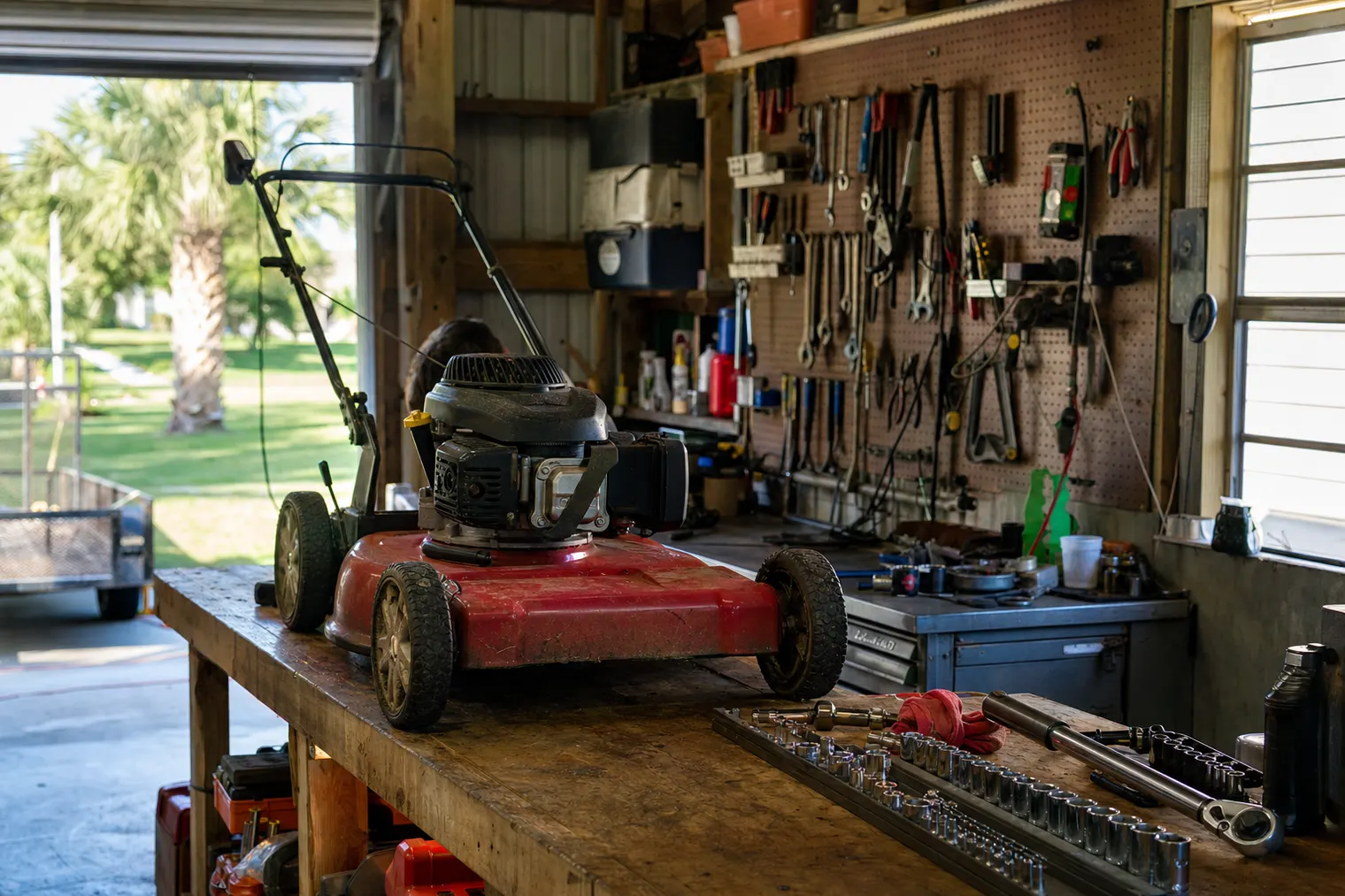
Mower Specialists
Not a fix-everything shop. Lawn mowers only, so we have seen your exact problem before.
Quotes Before Work
You hear the price first and approve it. No mystery invoices, no pressure.
Fast Turnaround
Florida grass grows year round. Most tune ups and sharpens turn around fast.
Pickup & Delivery
Riding mower will not run? We can come get it and bring it back cutting.
What’s Your Mower Doing?
Jump straight to the guide for your exact symptom.
Every Lawn Mower Problem, One Local Shop
From a push mower that will not start to a zero turn that cuts crooked, this is the full menu. Every service links to a deep guide on what we do, what it costs and how we do it.
Lawn Mower Repair
Full diagnosis and repair for every type of walk behind and riding mower, gas or battery.
Learn moreRiding Mower & Lawn Tractor Repair
Riding mowers and lawn tractors: transmissions, decks, engines, electrical and more.
Learn moreZero Turn Mower Repair
Hydro drive systems, spindles, decks and engines on residential and commercial zero turns.
Learn morePush & Self Propelled Mower Repair
Walk behind mowers fixed right: engines, drives, wheels, cables and hard starting.
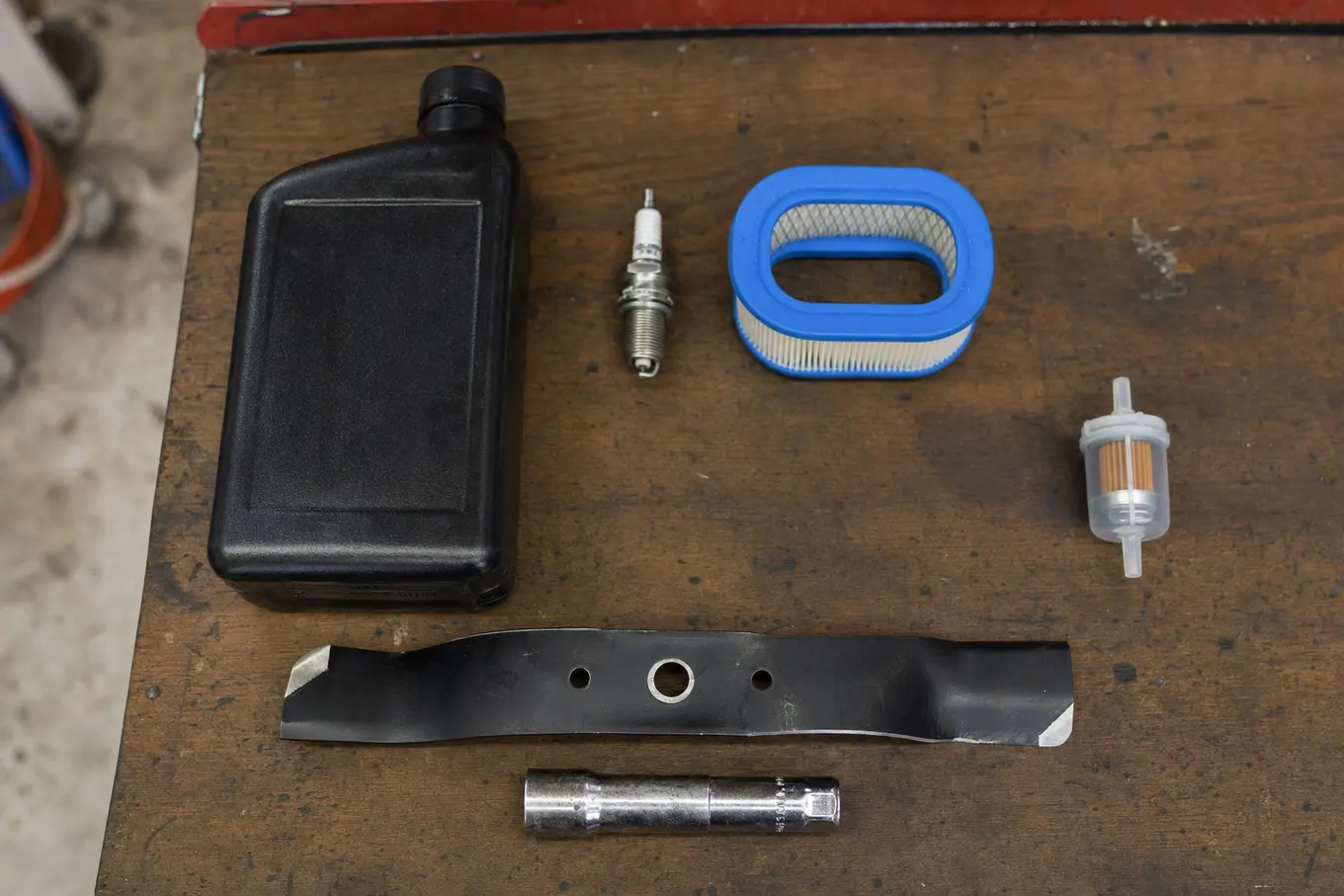
Learn moreLawn Mower Tune Up
Oil, plug, filters, blade sharpen and full go-over so your mower runs like new.
Learn moreBlade Sharpening & Balancing
Sharp, balanced blades cut clean and protect your engine. Same day in most cases.
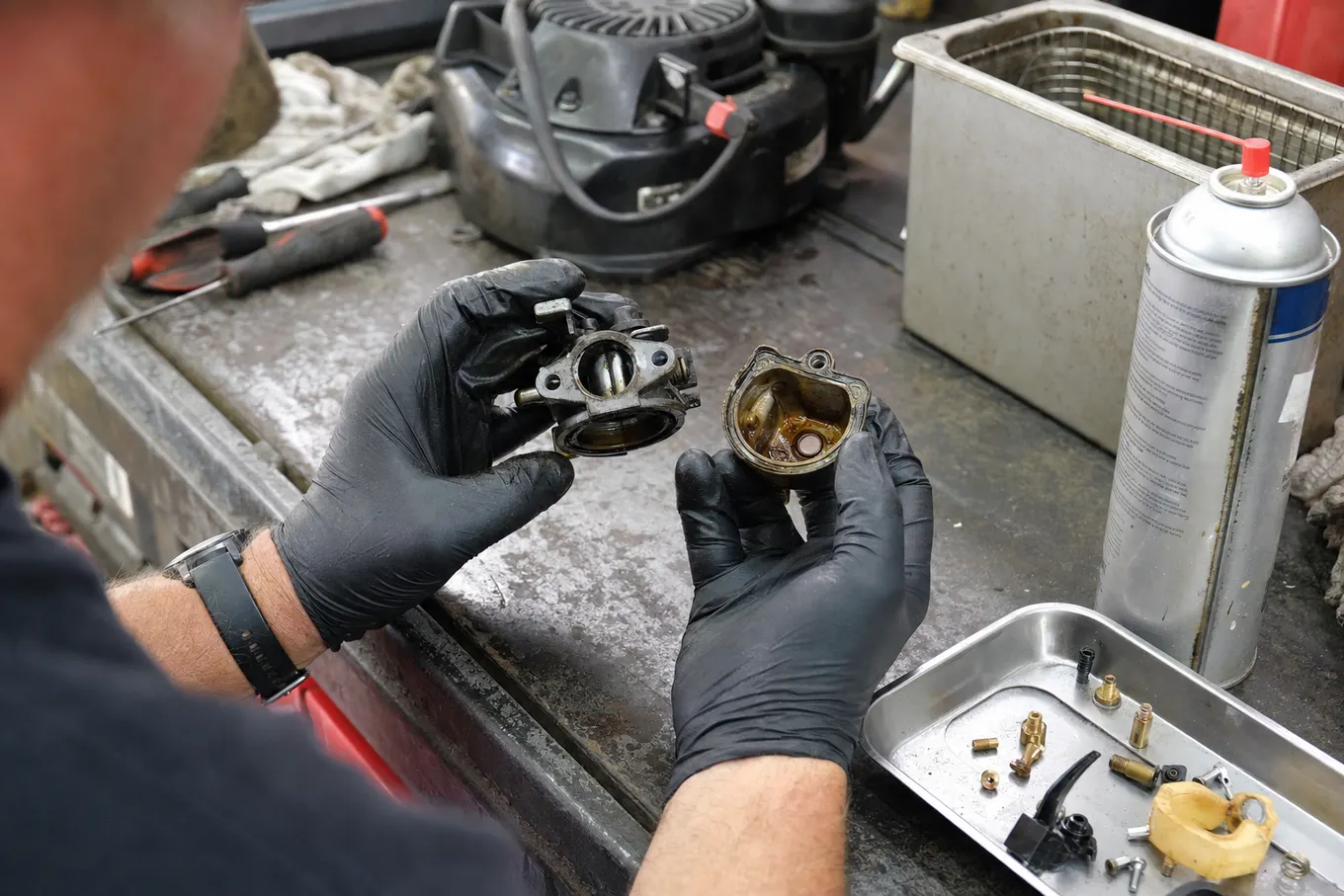
Learn moreCarburetor Cleaning & Repair
Florida’s ethanol gas kills carbs. We clean, rebuild or replace them and fix it for good.
Learn moreMower Won’t Start? Diagnostics
Cranks but won’t fire, starts then dies, no crank at all: we find it and fix it.
Learn moreBatteries, Starters & Electrical
Dead batteries, bad starters, solenoids, charging systems, safety switches and wiring.
Learn moreBelts, Pulleys, Spindles & Decks
Thrown belts, screaming spindles, bent blades and rusted decks made right.
Learn moreMaintenance & Oil Changes
Seasonal service that prevents breakdowns: oil, filters, grease, inspection.
Learn morePickup & Delivery
Can’t haul your riding mower? We come get it and bring it back running.
Learn moreSmall Engine Repair
Briggs & Stratton, Kohler, Kawasaki, Honda: the engines that power your mower.
Learn moreFlorida Kills Mowers. We Bring Them Back.
Down here a mower never gets a season off. St. Augustine and Bahia grass grow practically year round, the wet season doubles the cutting load, and the Gulf air rusts anything left outside. Most of what rolls into our shop failed for one of four very Florida reasons:
- Ethanol gas gone bad. E10 fuel absorbs moisture and gums carburetors in weeks, not months. The number one cause of a mower that cranks but will not start.
- Sand in everything. Our sandy soil dulls blades fast, chews spindle bearings and packs air filters with fine dust.
- Salt air corrosion. Within a few miles of the Gulf, decks, cables and electrical connections corrode years early.
- Heat and humidity. Cooling fins clog, batteries cook, belts glaze. August is brutal on machines and the people pushing them.
The Port Charlotte Mower Owner’s Handbook
Everything we tell customers over the counter, written down. This is how to keep a lawn mower alive in Charlotte County, from the fuel you buy to the week you leave for the summer. Read what you need, and call us for the rest.
Which gas to run in your mower here (and which to avoid)
The pump gas around Port Charlotte is E10, ten percent ethanol, and ethanol is the reason half the mowers in this county will not start in spring. It absorbs water from our humid air, then separates and varnishes inside the carburetor. If you burn through a tank every week or two in season, E10 is fine. If gas sits in your mower or your can longer than about a month, you are brewing a repair.
Three habits fix it. Buy smaller amounts of fresh gas more often, two gallons, not five. Add a quality fuel stabilizer to every can the day you fill it, not the day you store the mower. Or step up to ethanol free rec fuel, which several stations around Charlotte County sell at the pump: it costs more per gallon and saves you multiples of that in carburetor work.
Mowing St. Augustine grass without hurting it (height matters)
Most Port Charlotte lawns are St. Augustine, usually the Floratam variety, and the single biggest mistake we see is cutting it short like a northern lawn. St. Augustine wants to be tall: 3.5 to 4 inches. Scalp it down to 2 inches and it thins, burns in the summer sun, invites chinch bugs and weeds, and never looks right no matter how sharp the blade is.
Set the deck high, mow often enough that you never remove more than a third of the blade in one pass, and keep the blade sharp so cuts heal instead of fray. Brown, ragged tips a day after mowing are dull-blade damage, not disease, and a sharpen and balance fixes it for cheap. Bahia lawns, common on the bigger unirrigated lots, can run slightly shorter but punish dull blades even harder with their tough seed stalks.
The Southwest Florida mowing calendar, month by month
Our season never really ends, it just changes speed. December through February the grass naps: mowing drops to every two or three weeks, and this is the smartest time for a full tune up, when the shop is quieter and you are not missing cutting days. March and April the flush begins, weekly mowing returns, and every dull blade and lazy carburetor in the county gets discovered the same month.
June through September is the wet season grind: grass can genuinely need cutting twice a week, clippings are heavy and wet, decks clog, belts work hardest, and engines run in the worst heat of the year. October and November taper back down, which is the moment to fix the small stuff you noticed all summer before it winters into big stuff. If you only service the mower once a year, do it in the winter lull. Twice a year, add early summer.
Leaving for the summer? Prep the mower before you go
Every November we meet the same mower: parked in April with gas in it, dead in the fall. Six months of Florida heat and humidity turn a healthy machine into a no-start with a flat battery. The fix costs real money. The prevention costs almost nothing.
Before you head north: run the carburetor dry or stabilize the fuel properly, change the oil so acids do not sit in the crankcase all summer, clean the deck so damp clippings do not eat the steel, pull the battery or put it on a maintainer, and store the mower somewhere dry. We do this as a service if you would rather hand it off, and your mower starts on the first pull when you get back. Details live on our maintenance page.
Hurricane season and your equipment
From June through November, storm prep applies to mowers too. Before a named storm: get the mower off the lanai and out of the yard, into the garage, because a 200 pound riding mower is fine but a 60 pound push mower can move in serious wind, and flying debris ruins whatever it hits. If storage floods, elevate the machine on blocks. Fuel cans should be full, capped and stored safely, you will want that gas afterward.
After a storm, the yard is full of things that end mower blades: shingle nails, fence screws, palm boots, oak limbs half-buried in the grass. Walk the lawn before the first cut. If the mower took on water in a flooded garage, do not start it, bring it to us first. And when the whole neighborhood is cutting two weeks of growth at once, expect thick, wet grass to test every belt and blade you own.
Gas vs battery mowers in Florida heat: the honest comparison
Battery mowers have gotten genuinely good, and for the smaller lots in Port Charlotte and Punta Gorda they make real sense: no carburetor to varnish, no gas to sour, push-button starts. But Florida asks hard questions of them. Heat is the enemy of lithium packs, garage storage at 100 degrees ages them faster than the brochure says, and our thick summer St. Augustine drains a charge quicker than the northern test lawns those runtimes were measured on.
Gas still wins for big lots, Bahia acreage and anyone who cuts wet-season growth on a schedule. Whichever side you land on, we service both: blades, decks and drives are the same honest mechanics either way, and we will tell you the truth about whether a tired battery pack is worth replacing.
The five minute monthly check that prevents most breakdowns
Once a month, before you mow: check the oil on the dipstick and top it if it is low, look at the air filter and tap it clean if it is dusty, glance under the deck for packed clippings, check tire pressures on a rider so the cut stays level, and listen for new noises in the first thirty seconds of running. That is it. Five minutes.
Most of the expensive repairs on our bench started as something this check would have caught: an engine run low on oil, a filter choked with sand, a spindle screaming for grease. Machines rarely die suddenly, they announce it. The owners who listen spend the least money here, and we are fine with that.
When DIY makes sense, and when it stops making sense
We will never talk you out of changing your own oil, swapping a spark plug, cleaning an air filter or hosing a deck. That is ownership, and the mower is better for it. YouTube can walk a patient person through a belt swap on many machines too.
Where DIY gets expensive is diagnosis and fuel work. Guessing at parts costs more than knowing, carburetors punish enthusiasm with tiny springs and tinier passages, and safety systems on riders exist because blades are unforgiving. The honest line: if it needs a part named after a symptom you are sure of, go for it. If you are about to buy a second part because the first one did not fix it, stop, that is when a proper diagnosis becomes the cheap option.
What do brown tips, torn blades and wheel ruts say about your mower?
Your grass can tell on the machine. Not in a mystical lawn-care way. In a plain mechanical way. If the tips of the grass look brown a day or two after mowing, the blade is usually tearing instead of slicing. A dull blade leaves a ragged edge that dries out fast in Port Charlotte sun. A sharp blade makes a cleaner cut and the yard looks greener without you changing fertilizer, sprinklers, or anything else.
Torn blades can also point to deck speed. If the engine is sagging under load, the blade slows down and starts clubbing the grass instead of cutting it. That can happen from old fuel, a dirty air filter, a partly plugged carburetor, a weak governor spring, or grass packed under the deck until the blade is trying to move through a wet green cave. People search for mower repair near me because the lawn looks bad, but the first clue often came from the grass, not the engine.
Scalped crowns are a different complaint. A mower that suddenly shaves circles or diagonal streaks may have one tire low, a bent blade, a loose wheel, a deck hanger out of position, or a height adjuster that slipped on one corner. On riding mowers and zero turns, uneven tire pressure can make the deck cut crooked even when the deck itself is not broken. On push mowers, worn wheel bushings can let one side dip every time you cross a rough patch.
Wheel ruts are worth reading too. Deep tracks usually mean the yard was too wet, but they can also show a machine problem. A self propelled mower with one drive wheel stronger than the other may pull, dig, and leave an ugly line. A rider with a dragging brake or sticky hydro can chew the same turn every pass. If the mower feels like it is fighting you, the lawn will show it.
We are not diagnosing lawn disease from the bench. We are looking at the cut pattern. Bring a few clear pictures with your mower if you can. The grass often helps a lawn mower shop find the mechanical problem faster.
Bahia grass vs. St. Augustine: why one yard is harder on a mower than another
Southwest Florida lawns are not all the same job. Bahia and St. Augustine both grow here, but they punish mowers in different ways. St. Augustine is thick, broad, and heavy when it is wet. It loads the deck and asks for engine power. Bahia is thinner in the leaf, but it gets tall seed stalks that turn into little whip handles. Those stalks are tough on blades, and they make a cheap mower show its weaknesses quickly.
Bahia lots are famous for making a mower sound fine in the driveway and terrible once it hits the yard. The engine may run clean with no load, then bog when the blade starts knocking down seed heads. If the carburetor is a little dirty, the air filter is restricted, or the blade is dull, Bahia makes the problem obvious. The machine needs blade speed and torque, not just noise.
St. Augustine usually complains through clumping and deck packing. It holds moisture, especially after irrigation or rain. A mower that did okay in a dry patch can start choking in the thick side yard where the grass grows heavier. The underside of the deck fills up, airflow disappears, and the mower leaves ropes of clippings behind. That is not always a bagging problem. A deck has to move air to stand grass up and discharge it. When the tunnel is plugged, the best blade in town cannot work right.
Blade wear looks different too. Bahia seed stalks nick and round the edge faster than people expect. St. Augustine tends to build a sticky mat under the deck that corrodes metal and hides damage. One yard dulls the blade by abrasion. The other often rots the deck while everyone blames the grass.
If you are buying a mower for a Bahia-heavy lot, do not shop only by how shiny it is. Look for a stronger deck, serviceable wheels, and an engine family with normal parts support. If your yard is mostly St. Augustine, think airflow, deck cleaning access, and enough power to handle thick summer growth. The right small engine repair advice starts with the grass you actually mow.
Can sprinklers and reclaimed water rust out a mower deck faster?
Yes. A sprinkler-fed lawn can age a mower faster than a dry lot, especially if the mower gets parked with wet grass packed under the deck. Reclaimed water does not need to be scary to cause trouble. The simple problem is moisture, minerals, and time. Wet clippings stick to the underside of the deck, hold water against bare metal, and turn a little paint chip into a soft spot.
Morning mowing is the usual trap. The air feels cooler, the sun is not frying you yet, and the lawn looks ready. But if irrigation ran before dawn, the mower is chewing damp grass. Damp grass does not discharge the same. It clumps under the deck, sticks to the blade sail, and packs around spindle housings. On a riding mower, that wet mat can sit above the deck shell where you do not see it until the metal is already crusty.
Rust is not just cosmetic. A deck that loses strength flexes more. Flex changes the blade path. A weak deck can start cutting unevenly because the metal is no longer holding its shape. Around spindle mounts, rust can let hardware loosen. On push mowers, rust near the side discharge or rear door can change airflow and leave a ragged trail. By the time a hole opens up, the problem has usually been working for a while.
The fix is not complicated. Let the lawn dry when you can. If you have to mow damp grass, clean the underside before parking the machine for a week. Do it safely with the engine off, spark plug wire off on gas push mowers, battery removed or disabled on battery mowers, and blades stopped. A plastic scraper is usually kinder than a screwdriver. You are removing the wet mat, not chiseling a boat anchor.
After a wet mow, give the machine some air. Parking a hot, wet mower in a closed shed traps steam and salt air right where you do not want it. A few minutes of open-air drying helps. Around Port Charlotte, lawn mower repair is often less about dramatic failure and more about little moisture habits repeated all year.
Fire ants, lizards and love bugs: what Florida wildlife does inside a mower
Florida finds a way into machines. Fire ants, anoles, and love bugs are not the main reason every mower fails, but they cause enough odd problems that we look for them. The damage is usually indirect. Something nests, blocks air, chews insulation, corrodes contacts, or cooks onto a screen. Then the owner sees a no-start, a weak charge, or an engine that runs hot.
Fire ants like quiet spaces. A mower parked for a while can become real estate, especially around battery trays, key switches, solenoids, and plastic electrical boxes. They bring dirt and moisture with them. That dirt can bridge terminals or hold dampness against connectors. On a riding mower, ant activity near the starter solenoid can look like a bad battery because the key clicks or does nothing. Sometimes the battery really is weak. Sometimes the ants helped make the circuit ugly.
Anoles and small lizards usually show up around air boxes, shrouds, and cooling passages. Nobody enjoys that discovery, including the lizard. If debris gets pulled into the air filter or cooling fins, the engine may run rich, smoke, or overheat. A small gas engine depends on clean air and moving cooling air. Block one of those and the machine gets grumpy fast.
Love bug season adds its own mess. Screens, cooling intakes, and grille openings can plug with bug bodies, grass dust, and pollen. On riders and zero turns, that can restrict cooling air around the engine or hydro area. Heat does not have to make the engine quit immediately. It can shorten belt life, cook wiring insulation, and make a machine act worse after twenty minutes than it did at startup.
The practical habit is a quick visual check before mowing after a long sit. Look around the battery, under the seat, near the air intake, and on the cooling screen. Do not blast electrical areas with a hose. Brush, blow, or vacuum when possible. If the mower has already started clicking, surging, or smelling hot, bring it in before a small wildlife problem turns into a parts order.
The truth about mower oil in Florida heat
Mower oil arguments can get religious. From the repair bench, the first rule is simpler: the engine has to have the right amount of clean enough oil in it. Many push mower engines are splash-lubed. There is no pressurized oil system doing fancy work. A small dipper or slinger throws oil around inside the engine. If the level is low, the parts at the top get less help. If the oil is overfilled, the engine can smoke, foul the plug, soak the air filter, or push oil where it does not belong.
Brand matters less than level, condition, and correct viscosity for the engine. The owner's manual still wins. But in year-round mowing country, oil gets dark faster than people from seasonal climates expect. A mower in Charlotte County may not get a long winter nap. It cuts through heat, dust, wet-season humidity, and thick summer grass. Dark oil is not automatic doom, but it means the oil has been carrying heat and contamination.
Check oil on level ground with the dipstick seated the way the manual calls for. Some are threaded, some are not. That detail matters. We see plenty of mowers come in with a complaint that started after someone added oil by guessing. The bottle was nearby, the engine looked thirsty, and now the air filter has oil in it. Good intentions can make a mess.
Milky oil is a different warning. After heavy rain, flooding, pressure washing, or a mower stored where water can reach the engine, oil that looks like a tan milkshake means water got inside. Do not keep running it to see if it clears up. Water does not lubricate bearings well. If the mower was tipped the wrong way, left in a storm, or caught in rising water, stop and get it checked.
Oil also tells a story about engine health. Metallic sparkle, gas smell in the oil, or oil level that mysteriously rises can point to bigger issues. That is why a lawn mower shop checks the dipstick before chasing the carburetor. A clean fuel system will not save an engine that has been running low on oil in Florida heat.
How do you build a clean fuel habit around Charlotte County?
Clean fuel is not one purchase. It is a habit. Around Charlotte County, you have options: ethanol-free fuel where available, fresh regular gas used quickly, or canned fuel for low-use machines. The best choice depends on how often you mow and how long fuel sits. The worst choice is the old red can in the corner that nobody remembers filling.
E10 fuel can work if it is fresh and moving through the mower often. The trouble starts when it sits. Ethanol attracts moisture, old gas loses volatility, and the light parts that help cold starting disappear. The float bowl can hold just enough stale fuel to fire for a few seconds, then the engine dies when the main jet cannot feed cleanly. That is the classic "it starts, then quits" story.
If you use ethanol-free fuel, still treat it like food, not treasure. Buy what you will use in a reasonable window. Keep the can sealed. Store it out of sun and rain. Do not mix last season's mystery gas with fresh fuel and call it a tune-up. A mower carburetor has tiny passages, and those passages do not care that gas was expensive.
Snowbird schedules make fuel habits even more important. If the mower will sit while you are gone, either run the tank and carburetor dry in the right way, or use stabilized fuel and run it long enough to get that treated fuel into the carb. Pouring stabilizer into a full tank and shutting the shed door does not help the fuel already sitting in the bowl. The carb is where most of the expensive annoyance happens.
Fuel cans deserve attention too. A dirty can can undo clean fuel. Sand, water, grass clippings, and rust flakes all find their way into spouts. Keep a dedicated mower can, cap it, and replace it when the inside looks suspect. For a homeowner searching lawn mower repair Port Charlotte after another no-start, the repair may be mechanical, but the prevention often starts at the gas can.
Why do sandy yards make mower tires, wheels and cuts worse?
Sandy soil is easy to underestimate because it looks harmless. It is not mud. It does not seem heavy. But sand is abrasive, and it gets into places that were never designed to be a beach. Tires, wheels, bushings, bearings, and height adjusters all feel it.
Riding mower tires often go flat from sitting, and sand can make it worse. A tire bead has to seal against the rim. If fine sand, corrosion, or dried slime gets between the bead and rim, the tire may leak slowly. You air it up, mow once, park it, and find it soft again next week. Sometimes a puncture is hiding. Other times the bead is just not sealing cleanly anymore.
Low tires change cut quality. On a rider or zero turn, one soft rear tire tilts the whole deck. You may blame the blades, but the machine is leaning before the blades ever spin. Front tires matter too. A low front tire can make the deck nose dive on turns and scalp the yard. Tire pressure is not glamorous, but it is one of the cheapest cut-quality checks there is.
Push mowers have their own sandy-soil problems. Wheel bushings wear, height adjuster plates loosen, and drive wheels on self propelled mowers lose bite. A wheel that wobbles changes deck height every few feet. A drive wheel packed with sand may click, slip, or drag. That makes the mower feel harder to push and leaves an uneven pattern behind you.
Sand also sticks to wet grass under the deck, turning the mower into a slow-moving grinder. Blade edges dull faster, paint wears off, and metal starts rusting where the protective coating disappeared. This is why a mower used on a sandy Bahia lot may need attention sooner than the same model on a small, dry, tidy patch of St. Augustine.
If the mower pulls, tracks crooked, leaves waves, or seems harder to roll than it used to, do not ignore the wheels. Small engine repair is not only engines. The parts that carry the mower across our sandy yards decide whether the blade can cut level in the first place.
Buying a used mower in Southwest Florida: the 10-minute driveway inspection
A used mower can be a smart buy, or it can be somebody else's repair bill with fresh Armor All. You do not need a full shop inspection in the seller's driveway, but ten honest minutes can save you from the obvious traps. Bring a flashlight, a rag, and enough patience to hear the machine cold.
Start with the cold start. If the engine is already warm when you arrive, ask why. A mower that starts beautifully hot may be miserable cold. On a pull-start push mower, feel for compression. The rope should have a firm pulse, not a lazy spin with no resistance. On a rider, listen for more than "it cranks." A fast spin with no fire, a hard clunk, or repeated clicking can each point a different direction.
Check the oil before it runs. Low oil tells you how it was treated. Oil that smells strongly like gas can mean fuel leaked past the carburetor. Milky oil can mean water got in. Thick black oil is common in hard-used mowers, but paired with neglect everywhere else it is not a good sign.
Look under the deck. Deck rot matters. Surface rust is normal around here. Soft metal, cracks near mounts, missing chunks, or a deck packed with old wet grass are bigger warnings. On riders, look around spindle mounts and belt covers. On push mowers, check the side discharge, rear door area, and wheel mounts.
Blade bolt evidence is easy to miss. Rounded bolts, hammer marks, or a blade installed upside down suggest rough work. A bent blade can mean the mower hit something hard enough to bend the crankshaft on some push mowers. If the handle buzzes badly or the engine shakes after startup, walk away or price the risk honestly.
Hour meters are useful, but not holy. Some only run with the key on. Some have been replaced. Judge the whole machine: pedal wear, seat condition, deck wear, tire age, wiring repairs, and how the owner talks about maintenance. Before you buy, get a second opinion if something feels off. That is cheaper than dragging home a mower-shaped lesson.
Should I mulch, bag or side discharge grass in Southwest Florida?
Mulching, bagging and side discharge are not just lawn style choices. Each one changes the load on the mower. Mulching asks the blade and deck to cut the same clippings several times before they fall back into the turf. That can be good for a healthy lawn when the grass is dry enough and you are cutting a reasonable amount. The clippings break down instead of sitting in a pile, and you are not stopping every few passes to empty a bag.
The machine has to be ready for it. A dull mulching blade turns St. Augustine into bruised rope. A deck packed with old grass cannot circulate air, so clippings roll around in a wet wad until the engine starts to bog. In the wet season, a mower that mulches nicely in March may complain in July. If the engine note drops, the deck starts thumping, or the mower leaves green lumps behind, the lawn is telling you the deck is overloaded.
Bagging is useful when the yard got away from you, when leaves and seed heads are heavy, or when you do not want clippings tracked into the house. It can also make a small mower work harder because the blade has to lift material into the chute and bag. A half-plugged chute is not harmless. It backs clippings into the deck, makes the engine labor, and can pack damp grass around places that should stay clear.
Side discharge is the pressure relief valve. It moves grass out fast, usually with less deck load, and it can be the right answer during fast summer growth. The tradeoff is cleanup. Long windrows can smother spots if you cut too much at once, and nobody wants clippings blown into beds, doors, or the neighbor's driveway.
A practical Southwest Florida rhythm is simple. Mulch during drier stretches when you are mowing often. Side discharge when the lawn is thick, damp, or taller than planned. Bag when you are cleaning up leaves, seed stalks, or a missed-mow mess. If switching modes makes the mower suddenly run better, do not ignore that clue. The repair may be blade sharpness, deck buildup, belt slip, or engine power, but the mode exposed it.
How should I mow brand-new sod for the first few cuts?
Fresh St. Augustine squares look finished before they are truly ready for normal mowing. The top is green, the seams look neat, and the builder's irrigation has been running like it is trying to refill the Gulf. Under that, the roots still need time to grab. The first question is not the calendar. It is whether the sod is anchored. If a corner lifts easily when you tug it, the mower can lift it too.
The first cut should be gentle. Use a sharp blade, set the mower high, and mow when the surface is firm enough that your shoes do not leave deep prints. A dull blade pulls and shreds new grass. On established turf that looks ugly. On new sod it can tug at squares that are still knitting together. Heavy turns are the other problem. A zero turn or riding mower can scuff a new lawn fast if you pivot hard while the roots are shallow.
Builder-grade irrigation creates its own mowing problems. New lawns are often watered often, and the low spots stay soft. Damp sod makes clippings stick under the deck, adds weight to the cut, and lets wheels press tracks into the soil. If the mower starts leaving shiny wet clumps, the lawn may not be dry enough for the cut you are asking it to make. Waiting a few hours can be better than forcing it because today was the day on the chore list.
Keep the first few mows light. Do not chase a golf-course look. If the grass has grown tall, step it down over more than one cut instead of dropping the deck and making the mower do all the correction at once. A lighter cut protects the lawn and keeps the deck from turning into a wet clipping blender. That patience saves roots and repairs.
The lawn can move toward normal mowing when the sod resists lifting, the seams are tightening, and the ground holds the mower without rutting. Even then, pay attention to blade sharpness and tire pressure. New construction yards around Port Charlotte often have sandy fill, uneven settling, and irrigation that soaks one strip more than another. The mower will find those spots immediately.
What should I check before loaning or borrowing a mower?
A borrowed mower lives a harder life than anyone admits. Three households may use it, but nobody feels like the true owner when it needs oil, a blade, a filter, or a cleaning. The machine gets different fuel from different cans, different cutting heights from different yards, and different ideas about what counts as a rock. By the time it reaches the repair bench, the story often begins with, my neighbor used it once.
If you borrow a mower, check the oil before you start it. Not just the gas. Gas gets all the attention because the engine will not run without it, but oil is what keeps a small engine from becoming scrap metal. Check it on level ground, use the dipstick correctly, and do not overfill it. If the oil is low, ask what oil the owner uses before adding the wrong thing or guessing from a dusty bottle.
Look at the blade area safely before mowing. Engine off, blade stopped, spark plug wire off on a gas push mower if you are reaching under it. If the deck is packed solid from the last yard, you are borrowing a problem, not a mower. Wet clippings left under the deck make the next cut worse and hold moisture against metal. Returning it cleaner than you got it is not fancy etiquette. It is basic machine survival.
Set the height with care. Do not yank a sticky lever until it bends. Do not drop the deck low because your yard is behind. If the mower bogs, raise the cut or slow down. A shared mower often fails because every user tries to finish a different yard without knowing what the previous yard already did to the machine.
If you lend a mower, send it out with fresh fuel, a known oil level, and one clear rule: tell me if you hit something. A bent blade, hard vibration, or sudden no-start is easier to fix when the truth comes with the mower. If you borrow it, return it with fresh fuel, clean enough to inspect, and the oil where it belongs. Friendships have survived worse things than a mower, but there is no reason to test that over a dirty air filter and an empty crankcase.
What lawn crew habits can homeowners copy?
Lawn crews do not keep machines alive because the machines have easy lives. They keep them alive because maintenance is part of the work, not a guilt trip saved for later. A homeowner mower may run far fewer hours and still age badly because it gets parked hot, wet, dusty, and forgotten. The pro habit worth copying is rhythm.
Start with blades. Crews look at cut quality constantly because a bad blade makes every property look bad. Homeowners can copy the simple version: glance at the blade edge and the grass tips often. If the blade is rounded, nicked, or leaving torn grass, sharpen or replace it before the mower has to fight through another month. A sharp blade lowers engine load and makes the lawn look better without changing anything else.
Air filters are another quiet habit. A mower in sugar sand and dry grass dust breathes a lot of grit. Crews tap filters, blow loose debris from safe areas, and replace filters before the engine has to inhale through a dirty sock. Do not wash a paper filter unless the manual specifically says to. Do not run without a filter just to finish. That shortcut invites grit into the engine.
Grease points and moving joints matter on riders and zero turns. Pro machines get greased on a schedule because spindles, steering parts, deck lift pivots, and front axle parts do not announce every dry day out loud. Homeowners can use the manual and set a calendar reminder. The goal is not to over-grease everything into a mess. It is to keep serviceable joints from running dry while sand and moisture do their usual Florida work.
Deck cleaning is where many homeowner machines lose years. A crew is more likely to clean before the packed grass hardens. At home, people mow wet St. Augustine, park the mower in the garage, and let the underside sit like compost against metal. Scrape or wash carefully according to the mower design, avoid blasting bearings and electrical parts, then let the deck dry before storage.
The bigger lesson is accountability. Pro equipment gets checked because tomorrow's route depends on it. Treat your mower the same way before the next mow depends on it. A small end-of-job routine beats a big repair after a season of silence.
How should I mow after a Florida storm?
After a storm passes, the mower should not be the first tool out of the garage. Your shoes should be. Walk the yard before you cut. Look for branches, palm debris, roof scraps, sprinkler pieces, toys, landscape edging, stones washed into the grass, and anything shiny that was not there before. A mower blade does not care whether the object came from your yard or blew in from somewhere else. It only knows it hit something hard.
Storm grass is usually taller, wetter, and uglier than normal. If rain kept you off the lawn for two weeks, do not punish the mower by dropping the deck to your usual height and charging through it. Raise the cut for the first pass. Let the mower remove part of the growth without choking the deck. If the lawn still needs to come down, mow again later at a lower setting when the clippings and ground have had time to dry.
That staged approach protects the machine. Tall wet grass packs under the deck, pulls down blade speed, slips belts on some machines, and makes the engine work harder than it should. On riders and zero turns, heavy clippings can build around spindles and belt covers. On push mowers, the discharge path can plug until the mower is basically stirring a wet salad under the deck.
The ground matters as much as the grass. Soggy soil lets wheels sink, and ruts can form before you realize how soft the yard is. A rider can leave tracks that dry into bumps. A zero turn can tear the surface when it pivots. A push mower can bog one wheel down and twist the deck angle. If your foot sinks or water shines at the surface, the mower is probably going to make marks you will see after the sun comes back.
Storm cleanup also changes what the machine breathes. Damp leaves, sand, and shredded debris can stick to cooling screens and air intakes. Check those areas after mowing, especially if the engine smelled hot or sounded loaded. The goal after a storm is not a perfect lawn in one cut. It is a safe first pass, no bent blade, no rut city, and a mower that still wants to start next week.
What to Buy for Southwest Florida
The repair bench teaches a different buying lesson than the showroom floor. A mower can look impressive under bright lights and still be a poor match for a Port Charlotte yard. We see what happens after the first wet season, after sand gets into every moving part, after a snowbird machine sits with fuel in the carburetor, and after a thick Bahia lot asks a bargain mower to do grown-up work. That view changes what matters.
Steel gauge matters because decks live a hard life here. Thin metal can be fine on a small, dry lawn, but it is less forgiving when wet clippings sit under the deck or sand strips paint away from the lip. A stronger deck is not only about surviving impacts. It holds shape better, keeps spindles aligned, and gives the blade a better chance of cutting level. On riders and zero turns, the deck is a major part of the machine, not a tray hanging underneath for decoration.
Parts support matters more than brand gossip. We do not need to bash brands to tell the truth: some engine families, drive systems, belts, cables, wheels, switches, and deck parts are easier to get than others. A mower that uses normal, serviceable parts can stay useful for years with repairs that make sense. A machine built around oddball pieces can turn a simple failure into a scavenger hunt. If you are comparing two mowers, ask how easy it is to get blades, belts, cables, filters, batteries, and starter parts.
Serviceable design is the quiet feature. Can the air filter be reached without taking half the mower apart? Can the blade be removed without fighting damaged hardware? Can belts be inspected? Are the wheels replaceable, or are you buying a disposable corner of the mower? A good lawn mower shop notices these things because we are the ones trying to fix the machine after the brochure has been thrown away.
What push mower should I buy for a typical quarter-acre Port Charlotte lot?
For a typical Port Charlotte lot, a push mower should be easy to start, easy to clean, and strong enough to handle fast summer growth without bogging every pass. Do not buy only for the lightest weight. Light can be nice in the garage, but too light often means thin wheels, a flimsy deck, and less forgiveness when the yard gets sandy or uneven.
If the yard is flat and small, a simple walk-behind mower can be the best tool. Fewer drive parts means fewer things to repair. If you have slopes, thick St. Augustine, or you simply do not want to shove a mower through August growth, self propelled drive is worth considering. Check how the drive wheels are built. Plastic gears and worn tires can turn self propelled into self annoyed.
Look for a deck that gives you room to clean underneath, height adjusters that feel solid, and an engine with common filters and tune-up parts. Bagging is useful for leaves and cleanup, but do not assume you need every attachment. A mower that mulches well, discharges cleanly, and has a blade you can maintain will beat a gadget-heavy machine that cannot breathe under the deck.
If you are choosing between a cheaper mower now and a better-built mower you can maintain, remember that our mowing season does not give equipment a long vacation. Buy the machine you will actually care for, then keep the blade sharp and the fuel clean.
When does a riding mower or zero turn actually make sense?
A rider or zero turn earns its keep when the property is large enough, the mowing time is wearing you out, or the yard layout makes a walk-behind mower inefficient. The machine is not automatically better because it has a seat. It is better when it matches the lot. Tight gates, small side yards, drainage dips, tree roots, and soft sandy turns can make a big mower more awkward than helpful.
For open grass, a riding mower can save time and give a more consistent cut if the deck is set up correctly. For wide areas with many turns, a zero turn can be fast, but speed cuts both ways. A zero turn driven too quickly over rough ground can scalp, rut, and beat up the deck. The nicest machine in the neighborhood still needs sensible mowing.
Pay attention to deck construction, spindle access, belt routing, tire size, and whether common wear parts are available. Hydrostatic drives are smooth and convenient, but they need respect. If a hydro system is weak, noisy, or abused by constant high-speed turning in sand, repairs can get serious. Gear drive is simpler in some cases, but less common on many modern lawn tractors.
Before buying used, check the deck lift, steering play, brakes, charging system, PTO engagement, and cold starting. On any rider, tire condition matters because tire height affects cut height. If you are moving from push mower life to a rider, plan for maintenance too. More machine means more belts, blades, bearings, switches, and battery issues to keep up with.
Are battery mowers a good idea in Florida heat?
Battery mowers can be a good fit for the right yard, but Florida makes the shopping decision more practical than trendy. Heat, thick summer grass, storage habits, and replacement battery cost all matter. A battery mower that works beautifully in a thin, dry yard may struggle when St. Augustine is tall, damp, and heavy after a week of rain.
Runtime claims are best treated as polite suggestions. Thick grass pulls more current. A dull blade pulls more current. Bagging pulls more current. Mowing at a low height in August pulls more current. If the advertised runtime barely covers your yard on paper, the real yard may be less forgiving. Buy enough battery capacity that you are not finishing every mow in panic mode.
Heat is the other big point. Batteries do not love being stored hot. A garage in Southwest Florida can punish a pack even when the mower is not working. If you buy battery equipment, plan a sensible charging and storage routine. Let hot packs cool before charging when the manual calls for it. Keep packs dry, clean, and out of the worst heat when possible.
Also ask what happens when the battery ages. Can you buy a replacement pack? Is the mower still worth keeping when that pack needs replacing? Are blades, wheels, switches, and safety parts available? Battery mowers still have mechanical parts. They still bend blades, pack decks, wear wheels, and need cleaning. Quiet does not mean maintenance-free. It only means the mower complains at a lower volume.
Which mower features matter, and which ones are mostly marketing?
Useful features solve real problems. Marketing features look good on a tag. A washout port sounds helpful, but it is not magic. If you use it, use it as directed and still inspect the deck. Water can leave wet grass stuck in corners, and parking the mower wet is exactly how decks start rotting. A scraper and a dry deck still matter.
A blade brake clutch can be genuinely useful for some users because it lets the blade stop while the engine keeps running. That can be handy when emptying a bag or crossing shell, gravel, or a driveway. It also adds parts. If you will never use it, simplicity may be better. If you will use it constantly, buy one that feels solid and has parts support.
Hydrostatic drive versus gear drive depends on the machine and the yard. Hydro is smooth and easy, especially on riders. Gear systems can be simpler, but not every buyer wants to shift or live with fixed speeds. The key is not the word on the sticker. It is whether the drive feels strong, serviceable, and appropriate for the property.
Fabricated decks are often discussed like they are automatically superior. They can be stronger, especially on larger machines, but design still matters. Stamped decks can cut well and move air beautifully. Fabricated decks can be tough but still clog if the shape is poor or the grass is wet. Judge the whole deck: thickness, airflow, spindle mounting, cleanout access, and how easy it is to get blades.
Other features are comfort choices. Electric start, larger rear wheels, better handles, armrests, lights, cup holders, and high-back seats may matter to you. Just do not let comfort hide weak fundamentals. The mower still needs to start, cut, cool, steer, discharge, and accept normal maintenance.
Whatever you buy, keep the relationship between purchase and maintenance clear. A strong mower can be ruined by stale fuel, low oil, a dull blade, and wet grass packed under the deck. A modest mower can live a good life if it is matched to the yard and serviced before small problems snowball. We can help with keeping the new machine alive, and we handle honest repair when it breaks. If you are stuck between two choices, ask us before you buy and we will tell you what we would want to work on later.
From Broken to Cutting in Four Steps
Tell us what it is doing
Call, text or send the quote form. A photo and a sentence like "cranks but will not start" is all we need to get moving.
Honest diagnosis
We look the mower over, find the real problem and quote you a real price. You approve it before any wrench turns.
Fixed right
Quality parts, correct torque, fresh fluids. We test cut and adjust before we call it done.
Back on your lawn
Pick it up running or have us bring it back to you. Then go make the neighbors jealous.
How Pricing Works Here
No mystery menu, no repair that grows in the dark. You tell us the symptom, we find the cause, and you hear the exact price before a single part goes on. Say yes and we fix it. Say no and you owe us honesty, not apologies.
- Quotes come first. Approval is yours, in plain words, before work begins.
- Repairs are compared to replacement. When a fix does not beat the cost of a decent new machine, we say so and mean it.
- Small jobs stay small. A blade sharpen is a blade sharpen. Nobody here upsells you a project.
- The work is explained. Old parts, honest reasons, no jargon fog. Ask anything.
Serving Port Charlotte and 30 Miles in Every Direction
Based in Port Charlotte, wrenching for homeowners across Charlotte, Sarasota, DeSoto and Lee counties. Find your town for local details, drive times and what we see most in your neighborhood.
If It Cuts Grass, We Probably Fix It
John DeereCraftsmanToroHusqvarnaCub CadetTroy-BiltSnapperAriensMurrayPoulan ProBad BoyGravelyExmarkScagHustlerFerrisHondaLawn-BoyEGORyobiGreenworksKobalt
Plus the engines underneath: Briggs & Stratton, Kohler, Kawasaki, Honda GCV and GXV, Tecumseh, Loncin. Independent shop, not a dealer, which means we fix what makes sense instead of selling you a new one.
Lawn Mower Repair Questions, Answered
How much does lawn mower repair cost in Port Charlotte?
Most common repairs like carburetor cleaning, tune ups and blade sharpening are far cheaper than replacing a mower. We look the machine over, tell you exactly what it needs and what it costs, and you decide before any work begins. No surprise bills, ever.
Can I drop my mower off without calling first?
You can, but a quick call or text first means we know your mower is coming, we can ask the two or three questions that speed up diagnosis, and you will not catch us out on a pickup run. Thirty seconds on the phone usually saves a day on the bench.
Do you fix mowers for lawn care businesses?
Yes, and we understand the difference: a homeowner mower down is annoying, a crew mower down is payroll standing still. Tell us it is a working machine when you call and we will be straight about the fastest realistic path back to cutting.
What should I check before bringing my mower in?
Two minutes of homework helps: is there fresh gas in the tank, is the oil on the dipstick, is the battery charged if it has one, and what exactly happens when you try to start it. Tell us those four things and diagnosis starts ahead of the game.
Do you sell used mowers or parts?
Our focus is repair. That said, ask when you are in: depending on what has come through the shop there are sometimes reconditioned machines or take-off parts worth talking about, and we can always point you toward what to buy new for our conditions.
Can you fix a mower deck that hit a sprinkler head or tree root?
Usually yes. Impact damage runs from a bent blade, which is cheap, through a bent crankshaft, which is a bigger conversation. We check the crank, the blade adapter, the deck shell and the spindles, then give you the honest verdict before you spend anything.
How long does a lawn mower repair take?
Simple jobs like blade sharpening or a tune up are often same day or next day. Bigger repairs depend on parts availability, and we always give you a straight answer up front. In summer the grass does not wait, and neither do we.
Do you work on riding mowers and zero turns?
Yes. Push mowers, self propelled mowers, riding mowers, lawn tractors and zero turns are all we work on, all day, every day. That includes engines, decks, belts, spindles, electrical and drive systems.
My mower sat all season and now it will not start. Can you fix it?
This is the number one call we get in Florida. Old ethanol gas gums up the carburetor while a mower sits. A proper carb cleaning or rebuild plus fresh fuel fixes most of them, and we will tell you honestly if yours needs more than that.
Do you offer pickup and delivery for lawn mowers?
Yes, we can arrange pickup and delivery around Port Charlotte and the surrounding towns, which saves you borrowing a trailer for a riding mower that will not run. Call or text us and we will set it up.
What brands of lawn mowers do you repair?
All the major brands: John Deere, Craftsman, Toro, Husqvarna, Cub Cadet, Troy-Bilt, Snapper, Ariens and more, plus the Briggs & Stratton, Kohler, Kawasaki and Honda engines that power them.
Do you repair electric or battery powered mowers?
We service battery mowers from brands like EGO, Ryobi and Greenworks: blades, decks, drive problems and general service. For failed battery packs and factory electronics we will give you an honest read on whether repair makes sense.
Should I repair my lawn mower or just buy a new one?
A good mower with a straight deck and a solid engine is almost always worth fixing. A carb clean and tune up costs a fraction of a new machine. When a repair is not worth the money, we say so plainly and you walk away with a straight answer instead of a bill.
What areas do you serve around Port Charlotte?
We serve the whole 30 mile circle around Port Charlotte: Punta Gorda, North Port, Englewood, Rotonda West, Venice, Cape Coral, Fort Myers, Arcadia, Boca Grande and every community in between.
Why does my mower run rough only in Florida summer?
Heat, humidity and ethanol gas are hard on small engines. Moisture gets into fuel, filters clog with sandy dust, and grass loads double in the rainy season. A seasonal tune up set up for Florida conditions keeps a mower running smooth through the worst of August.
Why does my mower start with starter fluid and then die?
That usually means the engine can fire, but the carburetor is not feeding fuel correctly. Starter fluid gives it a short burst, then it quits when the bowl, jet, or fuel passage cannot keep up. Old E10 gas is a common cause around Port Charlotte. Do not keep spraying it over and over. That can be hard on the engine and it avoids the real repair.
What causes grass buildup under a mower deck?
Wet grass, low blade speed, dull blades, and mowing too low all help clippings stick under the deck. St. Augustine after irrigation is especially good at making a green mat. Once airflow is blocked, the mower cuts worse and packs even more grass. Clean it with the machine safely shut down, then let the deck dry before parking it.
Why is my mower leaking gas from the air filter area?
A mower that drips fuel near the air filter often has a carburetor needle that is not sealing, a stuck float, old fuel debris, or damage from being tipped the wrong way. Gas can soak the filter and run into places it should not. If the oil level rises or smells like fuel, stop running it until it is checked.
Why does my riding mower click but not start?
One click can be a weak battery, dirty cable ends, a bad solenoid, a locked starter, or a safety switch problem. Repeated clicking often points to voltage dropping under load. Start with the battery and cable connections, but do not assume a new battery fixes everything. We test the circuit before throwing parts at it.
Why is one wheel on my push mower hard to push?
The wheel may have sand in the bushing, a worn drive gear, a bent axle bolt, or grass packed around the height adjuster. On self propelled mowers, one dragging drive wheel can make the whole mower pull sideways. That rough pushing feeling also changes cut height, so the yard may look uneven even when the engine runs fine.
Does sand really dull lawn mower blades faster?
Yes. Sand acts like abrasive dust. When it sticks to wet grass or gets pulled into the cutting area, it wears the blade edge and strips paint from the deck. You may not hit a rock and still lose sharpness quickly. Sandy Bahia lots are especially hard on blades, so cut quality can fall off before the engine shows any trouble.
Can I leave gas in my mower over the summer?
If you are mowing every week, fresh fuel moving through the machine is usually fine. The problem is fuel that sits through heat and humidity without being used. Summer storms, vacations, and snowbird schedules can leave gas aging in the tank and carburetor. Use fresh fuel, keep the can clean, and stabilize fuel before storage instead of after trouble starts.
Why does my mower vibrate so much that my hands go numb?
Shut it down and check before mowing more. Heavy vibration can come from a bent blade, loose blade bolt, damaged crankshaft, packed deck, failing spindle, or an engine mounting issue. A push mower that hit a root or sprinkler head can shake badly afterward. Vibration is not just annoying. It can loosen hardware and turn one repair into several.
Is it bad to mow wet grass in Florida?
Yes, it can be. Wet grass clumps under the deck, loads the engine, leaves ragged piles, and holds moisture against metal after you park. Sometimes you have to mow between storms, but raise the cut, slow down, and clean the deck safely afterward. If your shoes sink or the mower leaves ruts, the ground is too wet.
Why is my mower height lever stuck?
Sand, rust, bent linkage, dried grass, and a loaded deck corner can all freeze a height lever. Forcing it can bend the plate or make one wheel sit lower than the others. Try cleaning around the adjuster first with the mower off. If it still will not move smoothly, the lever needs repair before the mower starts cutting crooked.
How long does gas stay good in Florida humidity?
Gas can start causing mower trouble faster here than people expect, especially when it sits in heat with a vented can or half-empty tank. Fresh fuel used often is usually fine. Fuel that sits for weeks and then waits in the carburetor is where varnish and hard starting begin. Date the can and avoid mystery gas.
Do mowers need winterizing in Florida?
Not in the northern snow-season sense, but they do need storage prep any time they will sit. Snowbirds, vacations, rainy stretches, and slow winter growth can leave fuel aging in the carburetor. Clean the deck, stabilize or manage the fuel properly, check oil, and park it dry. Florida skips winter, not storage problems.
Why does my garage smell like gas near the mower?
Start by treating that as a leak warning. The smell may come from a stuck carburetor float, a needle that is not sealing, a cracked fuel line, a loose cap, a soaked air filter, or fuel in the oil. Do not keep parking it next to a water heater or other ignition source. Get the fuel system checked.
How short should I cut before summer vacation?
Do not scalp the lawn before leaving. Cutting extra short stresses the grass, exposes soil, and makes the mower work harder on the next overgrown cut. Mow at a normal healthy height shortly before you go, with a sharp blade. If you will be gone long enough for heavy growth, plan a cut while you are away instead of punishing the yard first.
Get Your Mower Fixed This Week
Tell us what it is doing and we will tell you what it needs, what it costs and how fast we can have you cutting again. Requests go straight to Joe’s phone. No spam, no runaround.
- Same day answers on most requests
- Photos help us quote before you even drive over
- Prefer to talk? Call or text (941) 555-0123