
Lawn Mower Repair in South Venice, FL
No HOA, no city hall, a ferry to your own beach, and a mower older than some of the neighbors' kids. South Venice runs on self-reliance, and we are the shop built to back it up: repair over replacement, parts hunting included, about 30 minutes away in Port Charlotte.
South Venice mower acting up? Joe’s Small Engine Repair works on everything from last year's big-box special to the machine you bought when the house was new. We are about 30 minutes south in Port Charlotte, we collect and return mowers on any South Venice street, and every repair gets quoted for your approval before it begins. Call or text (941) 555-0123.
The Neighborhood That Never Wanted an HOA
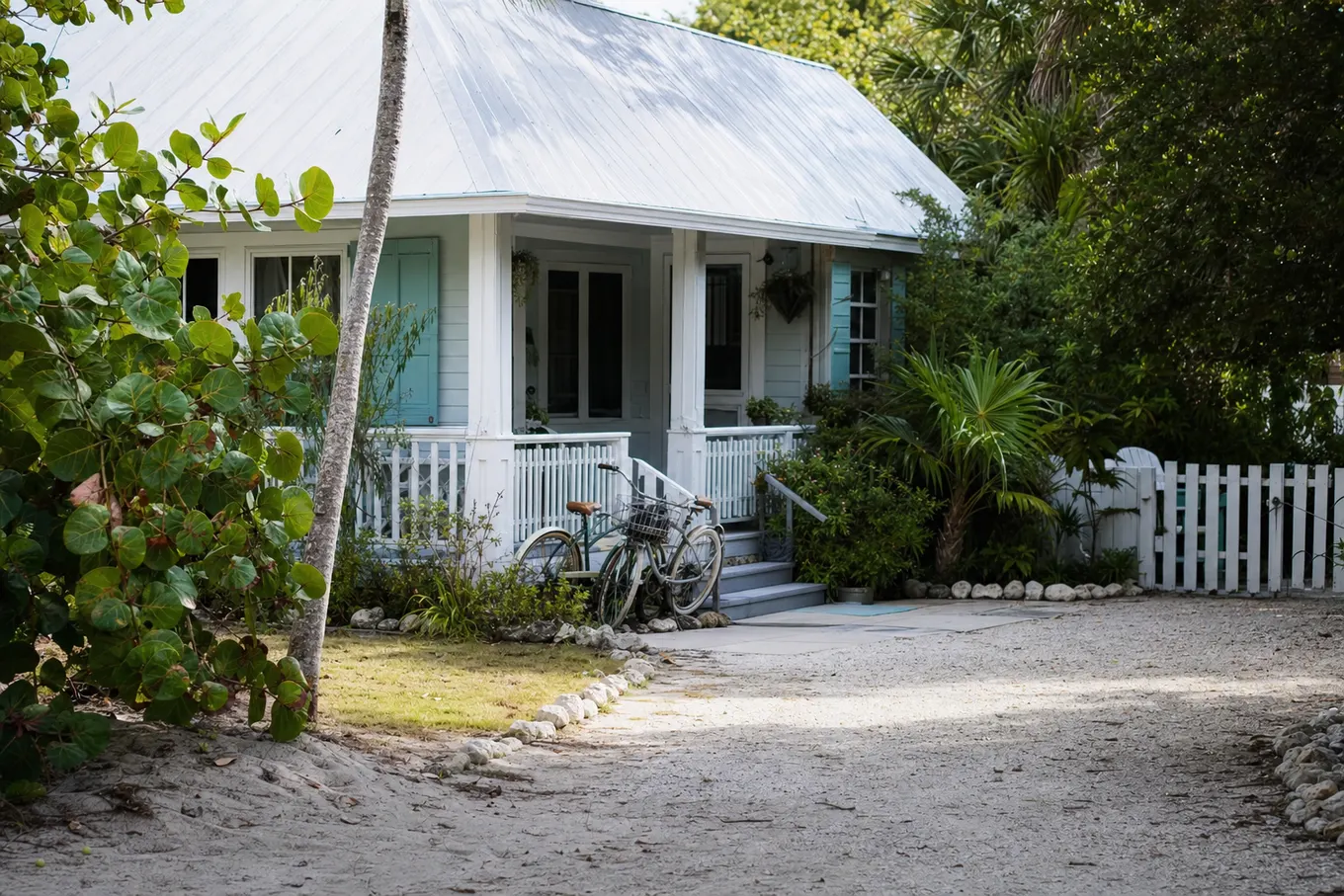
Squeezed between Venice and Englewood, South Venice is what this coast looked like before the gates went up: ranch homes from the 1960s and 70s on sandy lots, side streets that never got around to pavement, wells and septic tanks instead of utility bills, and a community ferry that carries residents to a beach the public cannot drive to. Unincorporated and proud of it.
The lawns follow the same philosophy. Most yards here drink rain, not city water, so the grass is the tough kind, Bahia and old mixed turf that browns politely in April and then grows like it is being paid once the summer storms arrive. Nobody is chasing putting-green perfection. They are keeping a healthy yard mowed with equipment they trust.
And that equipment has tenure. South Venice may have the oldest working mower fleet in our whole thirty mile radius: machines bought in the 90s or earlier, serviced in the garage, and still cutting the same lot decade after decade. When one of them finally needs more than a garage can give it, the owner wants a shop that sees a machine worth saving, not a trade-in.
That is precisely our kind of customer. The shop is in Port Charlotte, about 30 minutes down US 41, and old iron is welcome on our bench.
The Thirty Year Machine, and How It Stays That Way
There is a reason so many old mowers survive in South Venice. Machines from that era were built like farm tools: heavy gauge steel decks, engines you can reach with a socket set, drive systems assembled with fasteners instead of factory crimps. Nothing about them assumes they will be thrown away. Our job is to keep that assumption true.
Parts are the question everyone asks first, and the answer is better than people expect. The mower industry standardized around a handful of engine families, so a carburetor, coil, belt or cable for a decades-old Briggs & Stratton or Tecumseh powered machine very often crosses to an aftermarket part still being made today. We do the interchange homework as part of any engine repair, and when a component is genuinely unobtainable we tell you before money gets spent, not after.
Old engines also want slightly different care than new ones: valve clearances checked instead of assumed, governor linkages cleaned and set, ignition parts tested rather than replaced on a guess, and oil chosen for the engine's design rather than whatever is on sale. It is unhurried work, and it is the difference between an old mower that merely runs and one that starts on the second pull every Saturday.
The roll call from South Venice garages reads like a hardware store flyer from 1995: Murray and Snapper riders, Lawn-Boy two-strokes still trailing their signature haze, Craftsman everything, early Toro self propelleds, and engines from Briggs, Tecumseh and the occasional old Kohler. Some of those names have left the market entirely. The machines did not get the memo, and with parts interchange and patience, plenty never will.
Our honesty rule for aging machines is simple: age alone never condemns a mower. We call one finished only when something structural does, a cracked deck beyond saving, an engine with the bottom end gone, a repair bill that outruns any sane version of the machine's value. Until then, it is a repair candidate, and usually a good one.
- We will not replace parts on a hunch and bill you for the guesswork.
- We will not push a new machine on you because the old one takes effort.
- We will not start any repair before you have heard and approved the price.
What South Venice Ground Does to Equipment
Sand, rain-fed grass and long-serving machines create a wear pattern we can spot from across the shop. Four pieces of it, explained.
Grit is the local tax: sand roads and sandblasted mowers
Every unpaved street in South Venice donates a little dust to every yard along it, and the lots themselves sit on fine coastal sand. Mowers pay for that twice. From above, airborne grit loads the air filter and settles into cables, pivots and wheel bushings. From below, the blade's own airflow hurls sand against the deck's underside and across the cutting edge on every pass.
The results are predictable: edges that round off in weeks, wheel bushings that wobble loose, cables that drag in their sheaths, and a fine polish inside the deck shell where paint used to be. None of it is dramatic and all of it is cumulative, which is why sandy-lot machines reward owners who stay slightly ahead of the wear with regular edge work and an occasional going-over.
Well and septic lawns: grass that lives on rain
Without city irrigation, a South Venice lawn follows the sky. Through the dry winter and spring it idles, sometimes going weeks between cuts. Then the June rains flip the switch and the same yard needs mowing twice a week, often when the grass is still damp. That feast-or-famine cycle is harder on a mower than steady work: tall, wet growth is the heaviest load a residential machine faces.
Two habits protect it. Cut high on the first pass after any long gap, then come back down in a second pass a few days later, and keep the blade genuinely sharp going into summer, because tall Bahia punishes a dull edge. And yes, every local knows the joke about the greenest stripe in the yard growing over the septic drainfield. That stripe is real, and it is always the first place the mower bogs.
Keeping decades-old equipment honest
An older mower that has been maintained is a known quantity: its weak spots have already shown themselves and been fixed. The failures we see from South Venice are the slow, quiet kind instead. Fuel lines from another era soften with today's ethanol blends. Recoil springs tire out. Flywheel keys shear from one hard root strike years ago and finally show up as odd timing. Governor springs stretch until the engine hunts at idle.
All of it is fixable, and on machines this age the fix is usually inexpensive parts plus knowing where to look. That knowing is the value of a mowers-only bench: we have seen your exact engine family hundreds of times. Pair the old machine with a yearly service and it will keep embarrassing the disposable stuff sold today.
You do the easy half. We handle the machine work.
South Venice garages are working garages, and we treat them that way. Change your own oil, sharpen your own blades, swap your own plugs: excellent, keep going. The shop earns its place on the jobs beyond hand tools and driveway patience, engines losing compression, transmissions that quit pulling, carburetors that ignore a can of cleaner, electrical faults that eat a Saturday without confessing.
Bring us those, and bring the history with them. Knowing what you already tried shortens the diagnosis and trims the bill. There is no judgment at our counter about a DIY attempt that did not land. Most of what we know, we learned the same way, and finishing a repair someone started is normal work here, from carb rebuilds to drive and deck jobs.
Work That Respects an Older Machine
Small engine repair
Briggs, Tecumseh, Kohler and friends: compression, valves, governors and the deep engine work.
Full guidePush and self propelled repair
The backbone machines of South Venice, kept starting, driving and cutting straight.
Full guideSharpening and balancing
Sand rounds an edge fast here. We bring it back and true it up so nothing vibrates.
Full guideCarburetor rebuilds
Proper disassembly and cleaning, including the old-style carbs newer shops never open.
Full guideBelts, drives and decks
Gear drives, pulleys, cables and deck hardware, the wear points sand finds first.
Full guideYearly maintenance
One unhurried service a year is most of the secret to a thirty year mower.
Full guideAn Aging Mower's Vocabulary, Translated
Machines with decades of service talk before they fail. Owners here know their equipment well enough to notice. Here is what the common noises mean.
- A knock that follows engine speed. On an old single cylinder, often a loose blade or a worn blade adapter rather than doom. Sometimes it is the rod starting to complain. The difference matters enormously, so stop running it and let us listen before the cheap version becomes the expensive one.
- Blue smoke at startup that clears. Valve guides or seals letting a little oil seep overnight. On a veteran engine this can go on for years. Blue smoke that never clears, or arrives with power loss, is rings, and that conversation is about the machine's future.
- Revs swinging up and down at idle. The governor hunting, usually from a lean carburetor passage or a stretched spring, common after decades of Florida fuel. A cleaning and adjustment normally settles it back to that steady old thrum.
- The starter rope fighting back or snapping home. Recoil spring trouble, or on some engines the kickback of a sheared flywheel key doing damage in disguise. Worth a look before something breaks a finger or a flywheel.
- A growl from under a rider's deck that grows over weeks. A spindle bearing on its way out. Caught early it is a bearing job. Ignored, it wallows out the spindle housing, and old-deck housings are exactly the parts that take real hunting to replace.
None of these sounds mean retirement. They mean the machine is asking for attention from someone who speaks the language. Call (941) 555-0123 and describe the noise. You would be surprised how far that gets us.
Two Roads From South Venice, One of Them Ours
Haul it yourself
South of you on US 41, about 30 minutes, sits our shop at 4502 Meager Cir in Port Charlotte. A walk-behind rides fine in a hatchback with the seats down. Ring ahead so someone is free to help unload, describe what it is doing, and get you back on the road quickly.
Or we make the trip
The trailer goes where the mower is: shell roads, grass driveways, the back shed. We load it, diagnose it at the shop, call you with the number, and only proceed on your go-ahead. Return delivery puts it back exactly where we found it, running this time.
Up and Down This Stretch of 41
South Venice sits in the middle of our northern corridor, and its neighbors are covered just as thoroughly. Each link below is a full local page, or study the complete service area.
The repair patterns we associate with South Venice
South Venice has its own mower personality. It is unincorporated old Florida between Venice and Englewood, with sandy well and septic lots, ranch homes from the 60s and 70s, unpaved side streets, a private ferry to a residents only beach, and plenty of owners who keep equipment alive for decades. It is about 21 miles from our Port Charlotte shop, usually around 30 minutes, and the repair clues we hear from South Venice often start with the yard before they start with the engine.
That local mix changes what fails first. A mower from South Venice may be dealing with older hardware, sand, coastal humidity, seasonal use, or all four at once. Here are the patterns we pay attention to when someone in the 34293 area calls for lawn mower repair South Venice and says the machine ran fine last time, which is a famous last line in mower world.
Older ranch lots keep older mowers in service, and the wear stacks up quietly
The pattern is a mower with a good engine surrounded by tired support parts. Cables stretch, drive belts glaze, deck hangers loosen, wheels wobble, throttle linkages gum up, and safety switches get touchy. South Venice produces this because many yards and storage spaces have not changed much in decades. If an older push mower, self propelled mower, rider, or lawn tractor still fits the lot, the owner often keeps using it.
What we do is separate normal age from true end of life. During a lawn mower tune up, we look past the spark plug and oil. We check controls, drive engagement, pulley noise, deck vibration, blade stop behavior, tire condition, and whether the engine still runs cleanly once warm. A focused repair can make an older machine feel much less tired without replacing half the mower.
The prevention habit is to move every control through its full range once a month during mowing season with the engine off. Squeeze the bail, shift the drive, raise and lower the deck, and listen for scraping or binding. A sticky cable caught early is a small problem. A snapped cable usually waits for tall grass.
Sandy lots and unpaved side streets are hard on blades, filters, and deck parts
The pattern is a mower that starts and moves, but cuts rough, throws dust, leaves torn grass tips, or shakes more than it should. South Venice sand does not stay politely under the grass. It gets lifted by the blade, packed inside the deck, pulled into pulley areas, and caught in air filters. Even rolling across sandy drive areas can add grit before the blade touches the lawn.
Sand is a grinding compound. It dulls blade edges, scuffs deck surfaces, wears spindle seals, and makes bearings work harder. A clogged air filter can make the engine run rich or bog under load, so a weak running complaint is sometimes an airflow complaint wearing a fuel problem costume. If the cut is the main symptom, proper mower blade sharpening should be paired with a deck, spindle, and filter check.
The prevention habit is to raise the deck a notch over thin sandy patches and slow down near bare areas. After mowing, brush or blow loose sand from the top of the deck. The mower does not need spa treatment. It just needs the abrasive stuff kept away from the parts that spin fast.
Coastal humidity finds electrical connections before the owner notices
The pattern is intermittent nonsense: a key that clicks once, a battery that tests okay until the mower is under load, a starter that works one day and refuses the next, or a safety switch that shuts everything down. South Venice is not all beachfront, but coastal humidity is part of the environment. Salt air, damp sheds, summer rain, and warm storage all work on metal quietly.
We test the circuit instead of guessing by the noise. On starting complaints, we check voltage, battery posts, grounds, solenoid behavior, fuse holders, and charging output where the mower has a charging system. On riding mowers and zero turns, we also inspect safety circuits because one corroded switch can imitate a bigger failure. Sometimes cleaning a connection fixes it. Sometimes the right answer is replacing a terminal or switch that has been half failing for months.
The prevention habit is to store the mower dry and avoid wrapping it in a tarp that traps moisture. If it has a battery, keep the terminals clean and do not let it sit discharged through the wet season. Humidity is patient, which is rude but accurate.
Seasonal use and long ownership make fuel problems show up at the worst time
The pattern is a mower that starts for a few seconds, hunts up and down, only runs on choke, leaks fuel, or refuses to restart once hot. The float bowl can hold enough fuel for a short burst, then the engine starves because the carburetor passages are varnished or the needle is sticking. That is why a mower can sound promising for five seconds and still need real fuel system work.
South Venice has both year round owners and seasonal owners. Some mow constantly because the growing season does not take much of a vacation. Others travel, leave equipment sitting, or return to a machine that has been waiting in heat and humidity. E10 gas absorbs moisture, goes stale, and leaves deposits in small passages. For those symptoms, lawn mower carburetor repair means cleaning the fuel path, checking lines and filters, and proving the engine runs under load after the fix.
The prevention habit is to stop letting old fuel manage the mower. Use fresh gas, buy only what you will use soon, and run treated fuel long enough that it reaches the carburetor. If you are leaving South Venice for a season, plan the mower around that calendar. The grass will wait. The fuel will not.
If you are in South Venice and the mower is doing something odd, describe the symptom by phone or text before ordering random parts. Tell us the machine type and the exact behavior: clicks, starts then dies, cuts rough, smokes, surges, will not move, or shakes. If hauling it from a sandy lot is the hard part, ask about mower pickup and delivery. You can also send the details through the contact page and we will point you toward the next sensible step.
The Things Folks Here Actually Ask
Is a 25 year old mower actually worth repairing?
In South Venice, very often yes. Older machines were built with repair in mind: steel decks, simple engines, parts that come off with hand tools. If the deck is solid and the engine holds compression, most fixes cost a small slice of what a comparable new machine runs. When the math genuinely tips the other way, we say so before you spend a dime.
Can you find parts for a mower brand that does not exist anymore?
Usually. The industry built millions of these machines around shared engines and common hardware, so carburetors, coils, belts, cables and blades frequently cross-reference to parts still in production. We chase interchange numbers and aftermarket sources as part of the job. When a part is truly extinct, you hear that straight, along with whatever workaround exists.
Sand keeps wrecking my air filter. Is that normal here?
Completely normal. Between the unpaved side streets and the sandy lots, South Venice air carries more grit than almost anywhere we serve. Check the filter monthly during the cutting season instead of yearly, and expect to replace it more often than the manual suggests. A choked filter costs power and fuel, and it sends the engine dirt if it fails outright.
Will you pick up from the unpaved side streets?
Yes. Dirt and shell roads are no obstacle for the truck and trailer, and half the point of pickup service is reaching machines that are hard to move. Give us the street and any quirks, soft spots after rain, a tight turnaround, a dog with opinions, and we will plan around them.
How far is your shop from South Venice?
About 30 minutes. We are in Port Charlotte, and the run up and down US 41 is as simple as drives get. Customers who prefer not to make it twice use our pickup and delivery, and the mower travels while they stay put.
I do my own oil and blades. Will you take on just the hard part of a job?
Gladly, and no lecture comes with it. Plenty of South Venice customers handle routine service themselves and bring us the stubborn remainder: a carburetor that will not respond to cleaning, a drive that quit, an engine losing compression. Tell us what you already did, it genuinely speeds up the diagnosis, and we will pick up where your garage left off.
My lawn is on a well and grows in bursts. How should I maintain the mower around that?
Around the rain, not the calendar. Rain-fed lawns barely need cutting in the dry months and then explode in June, so get your service done in spring before the surge. The mower meets the wet season with a fresh edge and clean oil right when the grass starts demanding full power, and mid-summer tall-grass cutting stresses everything less.
Should I repair my push mower or just buy a new one?
Run the simple test: what failed, and what is the machine worth to you running? Common failures like carbs, cables, wheels and starters cost far less than replacement. Cracked decks and worn-out engines change the answer. We quote the repair before starting, so you make the call with a real number in front of you, not a guess in a store aisle.
Do you rebuild the old self propelled drive systems?
Yes. Gear-drive transmissions, drive belts, pinion gears, drive cables and wheels with stripped hubs are regular bench work here. Those drives were designed to be serviced, unlike some newer sealed units, and bringing one back is usually straightforward once we see which pieces the sand got to.
Can you tell me over the phone whether my mower is worth fixing?
Often we can get close. Tell us the machine, its age, what it was doing when it quit, and what you have tried, and we can usually name the likely culprits and a realistic range of outcomes before anything travels anywhere. It is a free conversation, and if the honest answer is do-not-bother, you will hear that too and keep your money.
Do you service lawn mowers in South Venice 34293?
Yes. South Venice is inside our normal service area, about 21 miles from the Port Charlotte shop. If you are searching for lawn mower repair South Venice or mower repair near me, describe the machine and symptom first so we can tell you whether drop off, pickup, or a repair conversation makes the most sense.
Can pickup work for a riding mower on a sandy South Venice property?
Usually, but access details matter. Tell us if the mower is behind a gate, on a soft sandy path, parked near a septic area, or unable to roll. That helps us plan the pickup correctly instead of discovering the mower is trapped in the least convenient corner of the yard.
When should a seasonal South Venice owner service a mower before leaving town?
Before the mower sits is better than after it refuses to run. Fresh fuel planning, a clean filter, a charged battery, and a quick look at belts and blades can prevent the first mow back from turning into a repair day. If it already sat with old fuel, do not keep cranking it endlessly.
Are older mowers from South Venice ranch homes worth repairing?
Sometimes they are, and sometimes they are done. The deciding points are engine health, deck condition, parts availability, and how well the mower still fits the yard. We are not trying to sell you a new mower, so the conversation stays practical: repair it if the repair makes sense.
Keep the Old Machine Cutting
Tell us what it is, how old it is, and what it stopped doing. We will give you a straight answer on whether it is worth fixing, and a firm price if it is. Spoiler: it usually is.
- About 30 minutes away, or we come to you
- Parts hunting for older machines included
- Talk it through first: (941) 555-0123