Lawn Mower Repair in Harbour Heights, FL
Harbour Heights keeps it simple: big unincorporated lots, old-growth oaks, a county park with its own boat ramp, and neighbors who cut their own acreage on their own schedule. When the machine doing that cutting quits, our Port Charlotte shop is about 15 minutes away, and mowers are all we do.
Looking for mower repair near Harbour Heights? Joe’s Small Engine Repair works on the tractors, zero turns and walk-behinds of the Peace River neighborhoods from a Port Charlotte shop roughly 15 minutes from your place. Haul it in if you have the trailer, or book our pickup if you do not. Firm quote first, then the work. Text or call (941) 555-0123.
A River Pocket That Mows Its Own Acreage
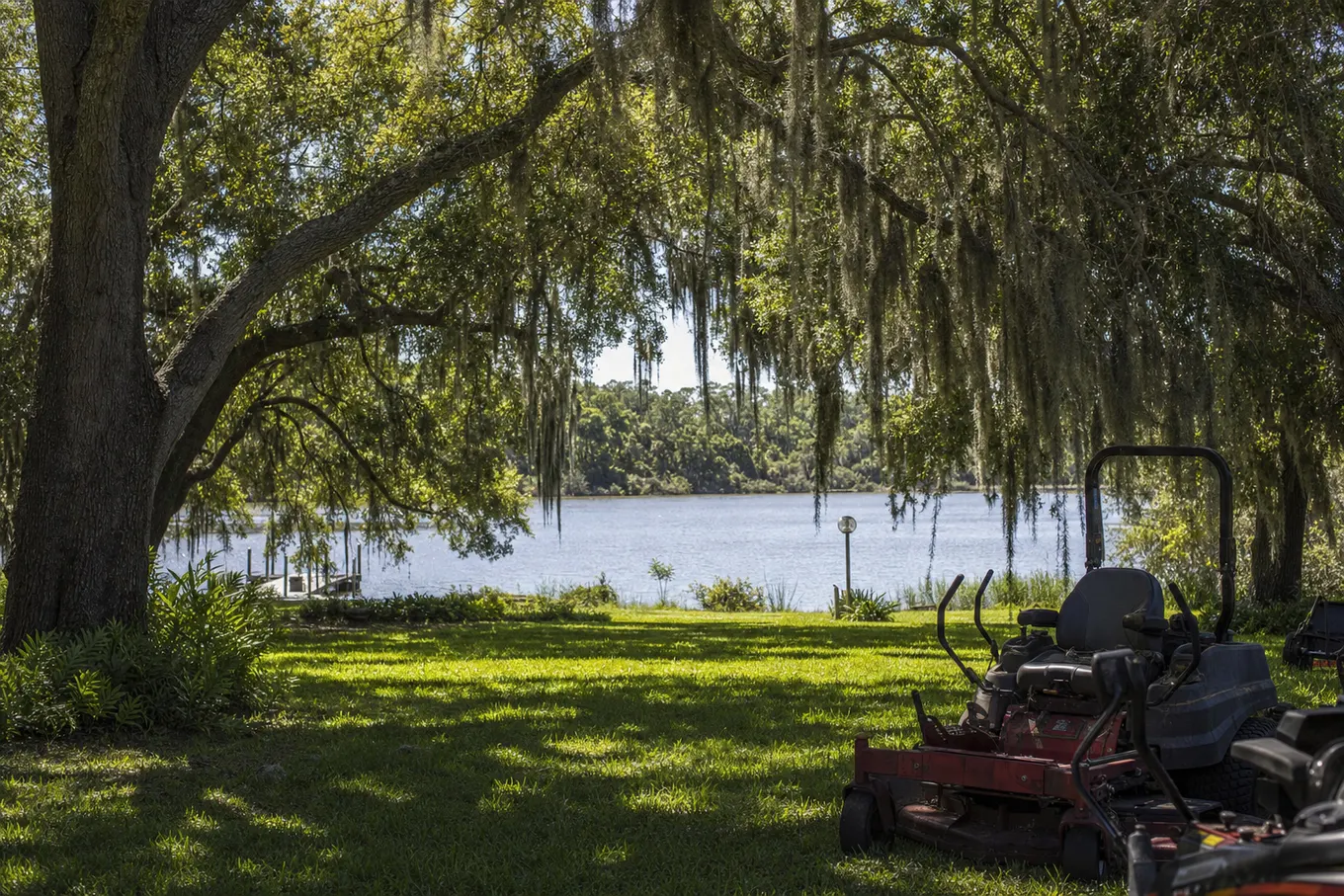
Tucked against a bend of the Peace River, Harbour Heights never turned into a subdivision with a gate and a monthly fee, and the people who live there like it exactly that way. Lots run bigger than the county norm, oaks that were old before the neighborhood existed shade the streets, and the county park on the water, ramp and all, is the closest thing to a town square. Around 3,000 people, no fuss, plenty of grass.
Plenty of grass means real machines. This is lawn tractor and zero turn territory, mowers that log actual engine hours cutting half-acre and full-acre yards through a growing season that never truly ends. Between the oak debris raining into decks, thick summer Bahia on the low ground, and river humidity working on steel and wiring, Harbour Heights equipment earns its wear honestly.
We fit this neighborhood well because we are close and because we stay in our lane. One shop in Port Charlotte, about 15 minutes from your driveway, doing nothing but lawn mower work: engines, decks, drives, electrical. Bring us the problem your socket set could not solve, and it comes back solved.
What Big Lots and Old Oaks Ask of a Mower
Machines from your neighborhood carry a particular set of scars. Here is what the Peace River side of the county does to them, and what actually helps.
The oak canopy is beautiful and it never stops shedding
Old-growth oaks drop something in every season: leaves by the bushel, catkins in spring, acorns in fall, dead twigs after every thunderstorm. Your mower inhales all of it. Leaf litter mats into the deck chamber and holds moisture against the steel, acorns ricochet off blade edges and leave chips you can feel with a fingernail, and fine debris finds its way into air intakes and cooling fins.
A chipped blade is worse than a dull one, it vibrates, and vibration loosens hardware and wears spindle bearings ahead of schedule. When we service oak-lot machines we inspect edges for impact damage, dig the compacted debris out of the deck and cooling system, and check that the engine is not running hot under a blanket of shredded leaves. If your yard has a canopy, mention it. It changes what we look for.
Acre-scale lots put double duty on every wear part
Cutting an acre of Florida grass forty-plus times a year is the equivalent of a small commercial route, and it lands hardest on the parts in motion: drive belts glaze and stretch, deck bearings load up, PTO clutches cycle thousands of times, and the engine accumulates hours faster than the calendar suggests. The machine still looks fine parked in the shed. The hour meter knows better.
The economics still favor you. A yearly service that renews the cheap parts, belts, filters, oil, blades, and measures the expensive ones, spindles, drives, valves, keeps a well-built tractor cutting for a decade or more. Replacing wear items on schedule costs a fraction of replacing the machine that dies when they let go mid-season.
Wet season turns the low river ground into heavy cutting
From June into October, the daily storms plus river-bottom soil produce Bahia and mixed pasture grass that grows inches in a week and cuts like rope. Mowers that idled through the dry months suddenly work at full load in wet, dense growth, and the weak links show up fast: belts slip and squeal, underpowered blades tear instead of cutting, clippings clump and rot on the lawn.
Beat the season instead of chasing it. A sharpen, belt inspection and air filter service in late spring lets the machine hit summer at full strength. And when something does let go in July, our pickup service exists precisely so an acre of grass does not get away from you while the tractor sits dead.
Where a do-it-yourself neighborhood uses a shop
Harbour Heights owners tend to be handy. Oil gets changed in the carport, blades come off with an impact gun, and a fair number of you have rebuilt a carburetor at the kitchen table at least once. We are not here to talk you out of any of that. It is the right instinct and it keeps machines alive.
Where we earn our keep is the layer past the toolbox: hydrostatic drives that whine or creep, electrical faults that hide in five connectors across the frame, engines that lost compression on one cylinder, decks that need spindle press work. Bring us the job that stalled in your garage, tell us what you already tried, and we will pick it up from there. That information genuinely speeds up the diagnosis, and you only pay for what was still wrong.
Built for the Machines Big Lots Run
Lawn tractor and rider repair
The acreage workhorses: engines, transmissions, steering, decks and everything between.
Full guideBelts, spindles and decks
Slipping belts, screaming bearings and oak-dinged decks trued up and quieted down.
Full guidePickup and delivery
No trailer needed. We collect dead riders from your driveway and return them running.
Full guideSharpening and balancing
Acorn chips and long-lot hours wreck edges. Sharp, balanced steel cuts cleaner and vibrates less.
Full guideAnnual maintenance
The full once-over that keeps high-hour machines from surprising you in July.
Full guideEngine work
Briggs, Kohler and Kawasaki twins included: compression, valves, rebuilds, honest verdicts.
Full guideTrailer Owners and Everyone Else
Haul it in
Half of Harbour Heights owns a trailer anyway. The shop sits at 4502 Meager Cir in Port Charlotte, about 15 minutes from the park side of the neighborhood. Give us a heads-up call and we will help you unload, walk the machine with you, and write up exactly what you are seeing before you leave.
Or we bring ours
For the boat-trailer households where the mower has nowhere to ride, our pickup service covers all of 33983. We set a window that suits your week, load the tractor or zero turn ourselves, and call with the diagnosis and price before touching a wrench. Delivery back to your shed is part of the deal.
Up and Down the River From Harbour Heights
We run the same honest operation for every community around you. Find your friends’ towns below or scan the whole coverage map.
The repair patterns we associate with Harbour Heights
Harbour Heights is only about six miles from our Port Charlotte shop, but the mowers that come from this Peace River pocket tend to have their own personality. The community is quiet, unincorporated, and spread across bigger lots than many Charlotte County neighborhoods. Add old-growth oaks, riverfront air, a county park with a boat ramp, and owners who usually mow on their own schedule, and the repair clues start to make sense. A Harbour Heights mower may not fail because it was abused. More often, it has been asked to handle long runs, damp storage, sandy oak shade, and a mowing rhythm that changes when life gets busy.
Bigger lots expose weak belts, deck bearings, and steering parts
The pattern is a mower that still starts and moves, but feels tired under the deck. It may throw a belt, leave one strip taller than the next, chirp when the blades engage, shake at full speed, or make a dry growl from one spindle. Harbour Heights has a lot of lots where a small push mower would turn mowing into a part time job, so we see plenty of riding mowers, lawn tractors, and wide deck machines that spend real time under load. That steady acreage work is different from trimming a postage stamp yard. Heat builds in belts. Deck idlers run longer. Steering bushings and front tires take a beating when the mower circles trees, sheds, fences, and low spots. When we diagnose that kind of complaint, we check belt tracking, pulley alignment, spindle play, deck pitch, blade condition, tire pressure, and the frame points that keep the cut level. A useful prevention habit is to stop mowing the moment a belt starts chirping or the deck changes tone. Those sounds usually arrive before the belt shreds, and they are cheaper to chase while everything is still in one piece.
River moisture makes small electrical problems act bigger than they are
The pattern is the annoying one: click but no crank, crank today but not tomorrow, battery seems new but weak, or the engine only starts after the key, brake, or seat switch is moved just right. Harbour Heights sits along the Peace River, and equipment stored near water does not need to be flooded to get cranky. Damp air works slowly on battery posts, safety switch plugs, starter solenoid terminals, ground straps, and the small connectors hidden behind panels. A tiny green crust on a connector can look harmless until the mower is hot, vibrating, and pulling current. We do not treat every no start as a battery sale. We test voltage under load, follow the ground path, inspect the fuse holder, look for rubbed insulation, and separate an actual starter problem from a bad connection feeding the starter. If the machine needs broader seasonal service, a lawn mower tune up is often the right time to clean terminals and catch early corrosion. The prevention habit is to store the mower where air can move. A tight plastic cover over a warm mower can trap moisture and make the electrical side worse, not better.
Owner mowed acreage creates fuel problems at awkward times
The pattern is a mower that was fine last time, then acts useless the morning the grass really needs cutting. It might start for five seconds and die, surge unless the choke is half on, or bog down once the blades engage. Harbour Heights has many owners who mow their own place because they want the lawn handled on their schedule. That independence is great until rain, travel, heat, or a busy week leaves the mower parked with E10 fuel sitting in the carburetor. The float bowl can hold enough fuel to make the engine tease you with a short start, while the main jet is still varnished or the needle is sticking. For carburetor repair, we check the fuel path before guessing: tank outlet, filter, line, cap vent, float, bowl, jet, gasket seal, and choke behavior. Then we run the mower long enough to know it restarts after heat soak. The prevention habit is to treat storage as part of mowing, not an afterthought. If the mower may sit for weeks, use fresh fuel, stabilize it, and run it long enough for treated fuel to reach the carburetor before you put it away.
Oak shade, sand, and wet season growth make the cut look worse first
The pattern is a mower that runs well enough, yet the yard looks bruised, streaked, or chewed instead of cleanly cut. Harbour Heights has old-growth oaks and bigger residential lots, which means roots, shade patches, sandy soil, leaf litter, twigs, and grass that may stay damp under the canopy after the sunny parts are ready. That mix is rough on blades and air flow. A dull blade tears grass instead of slicing it. Sand rounds the edge quickly. Wet clippings pack under the deck and choke the discharge. Leaves and grit can load an air filter until the engine feels weak even though the real problem starts at the blade and deck. Our blade sharpening work includes balancing the blade, checking for bends or impact damage, looking at the adapter, clearing the deck path, and making sure the mower is not being blamed for a cutting edge problem. The prevention habit is to mow a little higher under heavy shade and wait when the grass is wet enough to clump. After the mower cools, scrape packed buildup instead of blasting bearings, cables, and deck hardware with a hard stream of water.
If you are in Harbour Heights and searching for lawn mower repair Harbour Heights or mower repair near me, the most helpful first step is a plain symptom description. Tell us whether it clicks, cranks, starts then dies, throws belts, cuts unevenly, shakes, smokes, or bogs in thick grass. If transporting the mower is the hard part, pickup and delivery may fit the job. You can send the details through the contact page, or call or text with the mower type and what changed.
Answers for the Neighborhood
Where is your shop relative to Harbour Heights?
We are in Port Charlotte, about 15 minutes from the Harbour Heights side of the river, an easy run whether you come around by US 41 or drop down from the interstate. Plenty of your neighbors combine the trip with errands in town. Call or text ahead and drop-off takes five minutes.
Do you pick up riding mowers from Harbour Heights?
All the time, and honestly your neighborhood is one of the main reasons the trailer exists. Lots out there run big, the machines that cut them run big too, and a lawn tractor that quit is not going anywhere in a sedan. We schedule a window, load it from your driveway or shed, and bring it back mowing.
Oak leaves and acorns pack under my deck constantly. Does that actually hurt anything?
It does, in two ways. Wet leaf mats hold moisture against the deck shell, which is how rust gets started from the inside, and acorns are hard enough to nick a blade edge every time one gets flung around the chamber. Scrape the deck regularly, and let us check the blade for chips rather than just dullness when you are in for service.
My lot is over an acre. What should yearly service on my tractor cover?
For acreage duty we go past the basic oil and plug routine: blades off for sharpening and balancing, belts inspected for glazing and cracks, spindle bearings checked for play, tires and deck level set, battery and charging tested, every grease point hit. Machines cutting an acre or more rack up real engine hours, so the yearly once-over is what catches trouble while it is still cheap.
I handle my own oil changes and filters. Will you take just the bigger jobs?
Gladly, and no lecture comes with it. A lot of Harbour Heights owners do their own basics, then hand us the transmission that whines, the crank that will not turn, or the electrical fault that eats a Saturday. Bring us the stubborn stuff. We will tell you what we found and what it needs, and the routine work stays yours.
Why does my mower bog down every summer near the river?
Wet season Bahia on low river ground is some of the heaviest cutting in Florida. The grass grows stemmy and thick, mornings leave it damp, and a dull blade or slipping belt that survived winter just fine suddenly cannot keep up. A pre-summer sharpen, a belt check and a clean air filter fix most of the bogging we see from your area.
The deck on my old rider is more rust than steel at this point. Fixable?
Sometimes. Surface rust and a few thin spots can be cleaned, treated and watched. Once the shell rots through around the spindle mounts or the edges, patching becomes false economy and we will say so plainly. If the engine and drive are healthy, a replacement deck or a good used machine can both beat scrapping it. You get the options and real numbers first.
Will I know what the repair costs before you start working?
Always. The sequence never changes: we look it over, we figure out what it needs, we contact you with the price, and then we wait. Surprise bills are not a thing here, the approval step is built into how every single job runs. If you decline the work, you say so and come get your machine, no hard feelings.
Do you work on zero turns as well as lawn tractors?
Both, every week. Zero turns are common on the bigger Harbour Heights lots because they cut acreage fast, and we handle their hydro drive issues, spindles, clutches and engines alongside the traditional tractors. If it cuts grass and has an engine, or a battery for that matter, it belongs on our bench.
How fast can you get my mower back to me?
Straight answer: simple jobs like sharpening or a tune up commonly turn around in a day or two, diagnosis-and-repair jobs depend on what we find and how fast parts land. What we will not do is guess pretty. When we quote the work you get a real timeline, and grass season out on those big lots is exactly why we keep it honest.
Is Harbour Heights close enough for regular lawn mower repair from your Port Charlotte shop?
Yes. Harbour Heights is about six miles from us, usually around 15 minutes depending on traffic and where you are in the community. When you call or text, mention Harbour Heights, the mower type, and the symptom. That helps us sort out whether drop off, diagnosis timing, or pickup planning makes the most sense.
Can you help if my riding mower breaks on a larger Harbour Heights lot?
A larger lot changes the conversation. We will ask whether the mower rolls, whether the deck is stuck down, whether a belt came off, and whether it can be loaded safely. Riding mowers from Harbour Heights often need belt, deck, steering, blade, or fuel checks because they spend more time under load than small yard machines.
Why does my Harbour Heights mower act fine until the grass gets thick?
Thick wet season grass can expose a weak belt, dull blade, clogged deck, restricted air filter, or fuel delivery issue that does not show up on a quick driveway test. If it only bogs with the blades engaged, tell us that. Load related symptoms narrow the diagnosis fast.
What should I do before calling for mower pickup in Harbour Heights?
Start with access details. Tell us if the mower is behind a gate, parked under trees, stuck near a slope, or unable to roll. Harbour Heights properties can be roomy but not always trailer simple. A short description keeps pickup realistic and lets us plan the safest way to move the machine.
Keep the Acreage Machine Earning Its Shed Space
Describe the symptom, name your street, and we will take it from there. Big lots wait for no one in the growing season, and neither do we.
- Around 15 minutes between us and the river
- Trailer pickup across 33983 for machines that cannot travel
- One number, straight to the shop: (941) 555-0123