
Lawn Mower Repair in Charlotte Harbor, FL
The oldest community on the harbor happens to be the closest one to our bench. From the bungalows along US 41 to the water at Grassy Point, Charlotte Harbor mowers reach our Port Charlotte shop in about 8 minutes. You are not a town we cover. You are practically the neighbors.
Mower down in Charlotte Harbor? You are two miles from the fix. Joe’s Small Engine Repair covers every street in 33980, Bayshore to Grassy Point to the US 41 corridor, from our Port Charlotte shop about 8 minutes up the road. Bring it over, or we will fetch it. The quote lands before the wrench does. Call or text (941) 555-0123.
The Harbor’s First Neighborhood, and Our Nearest One
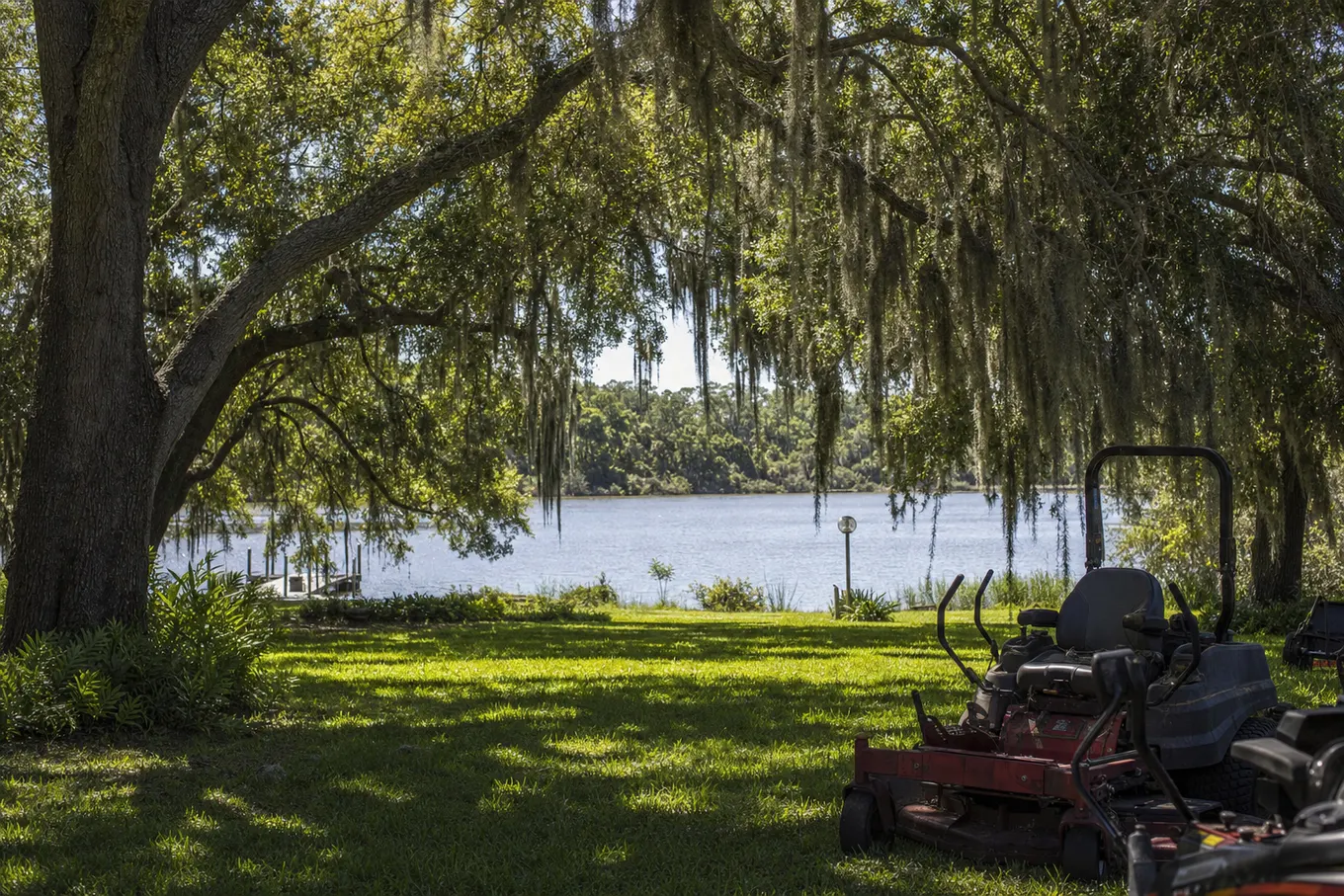
Before the bigger names around the harbor filled in, there was Charlotte Harbor, the old settlement on the north bank looking across at Punta Gorda. It still feels like early Florida in the good ways: live oaks hanging over Bayshore, tin-roof bungalows on sandy lots, a working stretch of US 41 where people actually live instead of just passing through. About 4,000 people call it home, and most of them are minutes from the water.
Those old yards are honest yards. The soil under them is real Florida sand, the oak canopy drops something every single day, and the air coming off the harbor carries enough salt to leave its signature on any steel that sits outside. A mower working Charlotte Harbor deals with all three at once, which is why the machines we see from 33980 tend to have dull blades, crusty terminals and decks wearing thin at the seams long before the engine itself gives up.
The good news is geography. Our shop sits about 8 minutes away in Port Charlotte, closer to your yard than most people’s supermarket. No other community we serve gets a mower onto our bench faster, and nothing but lawn mowers ever occupies that bench.
What Charlotte Harbor Yards Do to Mowers
Two miles is close enough that we recognize the damage patterns from your ZIP on sight. Four of them come up constantly.
Salt drift, from Bayshore out to Grassy Point
You do not need waves hitting the seawall for salt to work on a mower. The air itself does the job, settling a fine film on everything stored outside or in a breezy carport. On machines from the streets near the water we find the same trio over and over: battery posts growing white and green crust, wiring plug terminals going dark inside their housings, and rust blooming wherever deck paint has a scratch.
None of it is dramatic until the day the starter clicks instead of cranking, or a safety switch fakes a failure because its connector corroded. Once a year, let us clean and protect the electrical contact points and treat the deck steel. It is a small line on a service ticket and it quietly saves harbor-front machines years of life.
Sandy bungalow yards that grind blade edges away
The grass in the older parts of Charlotte Harbor often runs thin over pale sand, especially where oak shade wins the fight. Every pass of the mower pulls a little of that sand across the blade, and sand is what they make sandpaper out of. An edge that should last months rounds over in weeks, and a rounded edge tears grass instead of cutting it, leaving those brown-tipped ragged patches a day later.
The fix is cadence, not heroics. Run the deck a notch higher so the blade stays out of the soil, and get the blade sharpened and balanced a couple of times a season instead of once. Balanced matters as much as sharp: a lopsided blade shakes the engine bearings and the whole deck loose over time. We turn sharpening around fast, precisely because sandy-lot towns like yours need it often.
Live oak canopy: thin grass below, debris from above
The oaks are the best thing about the old neighborhoods, and your mower’s least favorite thing about them. They drop leaves in spring, acorns in fall, and twigs whenever the wind feels like it. Acorns and oak twigs are hard enough to chip a blade edge, and the leaf litter packs under the deck where it holds moisture against bare steel.
Shade changes the grass too. St. Augustine under heavy canopy grows sparse and tender, so every flaw in the cut shows, and surface roots sit right where a low deck can find them. If your yard lives under oaks, tell us when you drop off. We will check the blade for impact damage, not just wear, and look over the deck shell and spindles while it is on the bench.
Low ground, storm season, and machines that got wet
Charlotte Harbor sits close to the water and close to sea level, and everyone who lives there knows what a big storm can push ashore. Mowers stored in sheds and garages at grade level are usually the first equipment casualties, and the sad part is that water alone rarely kills them. What kills them is cranking the engine afterward, or letting them sit wet for a month.
If a machine floods, do not touch the starter. Get it to us within days, not weeks. Fuel drained, oil changed, cylinder cleared, ignition dried, corrosion arrested: handled promptly, that sequence saves most soaked mowers. We also prep machines before storm season, fresh oil and stabilized fuel, so whatever happens, the recovery starts from a better place.
The Work Your ZIP Sends Us Most
Push and self propelled repair
The right-size machine for bungalow lots, and we fix everything on it: engines, drives, wheels and cables.
Full guideBlade sharpening and balancing
Sandy yards dull edges fast. Quick turnaround so the mower is not out of action long.
Full guideCarburetor cleaning
Ethanol gas plus humid harbor air equals gummed carbs. We clean, rebuild or replace as needed.
Full guideNo-start diagnosis
Pulls but never fires, or clicks and quits: we trace fuel, spark and switches to the actual cause.
Full guideFull tune ups
Oil, plug, filters, sharpen, inspect. The once-a-year reset that suits year-round mowing.
Full guideSmall engine work
Briggs, Kohler, Honda and the rest, including the older engines on machines that came with the house.
Full guideFrom Charlotte Harbor, This Part Is Easy
Run it over yourself
The shop is at 4502 Meager Cir in Port Charlotte, roughly 8 minutes from anywhere in 33980. A push mower rides fine in a trunk or hatchback with the handle folded. Shoot us a text before you leave so someone meets you at the door, hears the symptoms firsthand, and gets your machine logged in on the spot.
Let the trailer do it
Riders and zero turns rarely load themselves, especially dead ones. Book a pickup and we handle the whole thing: ramps, straps, the works, right from your driveway. Being two miles out means Charlotte Harbor pickups are simple to slot in. You approve the quote by phone, and the mower comes home cutting.
Beyond Charlotte Harbor, Around the Bay
Friends across the bridge or up the river? Each town nearby has its own page with honest drive times and the failures we see from there, all part of one 30 mile service area.
The repair patterns we associate with Charlotte Harbor
Charlotte Harbor sits so close to the shop that its mower problems tend to show up early in the week and in very specific shapes. The community has older harbor character, sandy yards, waterfront air, and compact lots that still grow fast during wet season. That mix makes lawn mower repair in Charlotte Harbor less about one dramatic breakdown and more about several small problems stacking up until the mower refuses to act normal.
Compact lots create more stop and turn wear than people expect
A lot of Charlotte Harbor yards are not giant acreage. They are bungalows, corner lots, narrow side yards, fence runs, oak shade, and short passes where you start, stop, back up, and pivot constantly. That is easy on walking distance but rough on control cables, drive wheels, self propelled transmissions, deck height hardware, and handles that get muscled around roots and sandy edges.
The pattern we hear is usually not "the mower exploded." It is "it used to pull itself, now I am pushing it," or "the lever feels loose," or "it cuts fine until I turn at the end." On a small lot, those little complaints matter because you feel them every few seconds. A mower that would be merely annoying on a long straight lawn becomes miserable around older Charlotte Harbor landscaping.
In the shop, we check the cable travel, drive belt tension, wheel engagement, handle hardware, throttle response, and deck height points before we start throwing parts at it. If the mower also needs plugs, oil, filter service, and blade work, a lawn mower tune-up can make more sense than fixing one tired control and sending the rest of the machine out half awake.
A simple prevention habit: do not yank the self propel lever like a light switch at every turn. Ease it in, release before tight pivots, and keep grass clippings from packing around the drive wheels. That one habit saves more cable and wheel aggravation than most owners expect.
Harbor air finds every bare connector and cable end
Charlotte Harbor is not a barrier island, but it is still a harbor community. Moist air, afternoon storms, and salty exposure do not need much help to bother a mower. The first victims are usually battery terminals on riding mowers, starter solenoid connections, kill-switch wiring, throttle and choke cable ends, exposed fasteners, and the underside of the deck where damp clippings sit against metal.
The symptom can be confusing because the engine may be healthy. A riding mower might click but not crank. A push mower might run only when a control is held a certain way. A safety switch may act random because corrosion adds resistance where the circuit needs a clean signal. Owners often call it an engine problem, but sometimes the engine is just waiting on electricity or a cable that can move properly.
We look for the small physical clues first: greenish terminals, swollen cable sheaths, rusty grounds, weak cranking speed, brittle insulation, and deck areas where grass has turned into wet paste. Then we clean, tighten, test, lubricate where appropriate, and replace the pieces that are too far gone. That saves time compared with guessing at ignition parts just because the mower will not start on command.
Prevention is not complicated. Store the mower under cover, let the deck dry before parking it tight against a wall, and glance at battery terminals once in a while. If you see fuzz, rust, or a cable that feels stiff, deal with it before the first good mowing day after a rain week.
Being two miles away means small symptoms should not be allowed to become big ones
Charlotte Harbor is about two miles from our Port Charlotte shop, roughly an eight minute hop when traffic behaves. Because it is that close, there is no good reason to keep fighting a mower for a month while the problem gets more expensive. The US 41 corridor makes the community convenient, and that changes the right repair decision: catch the little warning signs while the mower is still mostly cooperating.
Common examples are a mower that needs three pulls instead of one, surges after warming up, dies when the blade engages, backfires after shutoff, or only starts with fresh gas poured into the throat. Those are not all the same failure, but they often sit in the same neighborhood: stale E10 fuel, a dirty carburetor circuit, weak fuel flow, a fouled plug, a clogged air filter, or a governor that is chasing an uneven mixture.
When the clues point toward fuel, we test before we tear deep. The float bowl can hold enough fuel for a brief start, which is why some mowers fire for a few seconds and quit. If the carburetor needs cleaning or replacement, we handle that directly through lawn mower carburetor repair instead of pretending a spark plug will cure varnish in a tiny jet.
Prevention habit: if the mower changes its starting routine, listen to it. One extra pull after a cold snap is not a crisis. A new weekly ritual involving choke gymnastics, starter fluid, and negotiation with the machine means it is time to call before wet-season grass doubles the pressure.
Sugar sand and oak litter make blades and filters work harder
Charlotte Harbor has plenty of sandy soil, older trees, and shaded areas where grass can be thin in one strip and thick in the next. That combination is hard on blades and air filters. Sand acts like an abrasive. Oak leaves, seed pods, and dry debris get chopped into the airflow path. Then wet-season growth asks the mower to cut heavy grass with a blade that is already dull and an engine that is breathing through dust.
The mower usually tells on itself. The lawn looks torn instead of cut. The engine sounds strained in thick patches. Dust puffs around the deck. The bagger stops packing cleanly. Sometimes the owner keeps lowering the deck to make the yard look neater, which just increases sand contact and makes the blade dull even faster. Florida lawns do not reward that kind of stubbornness.
In the shop, we sharpen and balance blades, inspect the blade adapter, clean the deck, check spindle or shaft condition, and replace clogged filters when cleaning is no longer enough. If the blade is bent, cracked, or ground past a safe edge, sharpening is not the smart play. Our lawn mower blade sharpening work is about a clean cut, but it is also about reducing vibration and engine load.
Prevention habit: raise the deck a notch before mowing sandy, stressed, or shaded areas, especially after dry spells. Blow or brush loose debris away from the intake area before each mow. A sharp blade and a clean filter make a modest mower feel less tired, and they keep the yard from looking chewed.
If you are in Charlotte Harbor, tell us what the mower is doing in plain English: how it starts, how it sounds, what changed, and whether it is a push mower, self propelled mower, riding mower, or zero turn. If getting it to us is the hard part, we can talk through mower pickup and delivery. For the fastest answer, call or text the symptom and mention Charlotte Harbor.
What the Neighbors Ask Us
How long does it take to get from Charlotte Harbor to your shop?
About 8 minutes on a normal day, and the trip is barely 2 miles. Charlotte Harbor is the nearest community we serve outside Port Charlotte itself, so you are looking at less driving than most people do for groceries. Send a text before you head over and we will be ready at the door.
Can I just swing by with my push mower without an appointment?
You are close enough that swinging by is tempting, but give us a quick call or text first anyway. It takes thirty seconds, it guarantees someone is free to look at the machine with you, and telling us the symptoms while the mower is right there saves a phone call later. Then yes, in and out.
Is pickup even worth scheduling when I live two miles away?
For a rider, absolutely. Distance was never the hard part, loading a 500 pound machine that will not run is. If your riding mower or zero turn is dead in the yard, we bring the trailer to Charlotte Harbor, load it ourselves, and roll it back to you fixed. Walk-behind mowers usually fit in a trunk, so most people just bring those in.
Does salt from the harbor actually reach mowers in 33980?
Along Bayshore and out toward Grassy Point, yes, and we can see it on the bench. Salt-heavy air settles on deck steel, battery posts and wiring plugs, and the corrosion creeps until something stops conducting or starts flaking. If your mower lives within sight of the water, an annual cleaning and treatment of those trouble spots is the cheapest protection there is.
My yard is half sand under thin grass. Why do my blades wear out so fast?
Because every pass over exposed sand works like a grinder on the cutting edge. The old bungalow yards in Charlotte Harbor sit on some of the sandiest soil around, and a blade that would stay sharp a full season on thick sod dulls in weeks here. Raise the cutting height a notch, and plan on sharpening a couple times a season. We keep that service fast and cheap.
The mower came with the house and it is older than my truck. Fix it or junk it?
Bring it by and we will tell you straight. Plenty of older machines were built heavier than what replaced them, and a carburetor cleaning plus fresh fuel lines brings them right back. When the engine itself is tired or a deck has rusted past saving, we say so before you spend a dime. The quote always comes first, so the decision stays yours.
Do you work on battery mowers? A lot of small lots here use them.
We do. On the compact yards along the US 41 corridor a battery mower makes real sense, and we handle the blades, drive problems and switch failures they develop. On battery packs themselves we will give you the honest math, because sometimes a replacement pack costs more than the mower is worth and you deserve to know that up front.
What should I do if my mower went under water during a storm?
Leave the starter alone, that is the big one. Charlotte Harbor sits low, and a machine that took on surge or rain flooding can survive if it is drained and dried quickly, but one crank with water in the cylinder can end it. Get it to us fast, or have us grab it, and we will deal with the fuel, oil, ignition and corrosion in the right order.
I am near Bayshore Live Oak Park. Do you know what those big oaks do to a lawn?
We know that stretch well, it is our own back yard practically. Heavy oak shade thins St. Augustine out, and thin grass over roots means your blade finds every acorn, twig and surface root the canopy drops. Shaded lawns show ragged cuts worse too. A sharp, balanced blade and a slightly higher deck setting make more difference under those trees than any fertilizer will.
How does pricing work when I bring a mower in from Charlotte Harbor?
Same as it does for anyone: we diagnose it, we call you with a firm quote, and nothing gets repaired until you say go. What moves the number is parts and time, a fuel system cleaning sits at one end, an engine rebuild at the other. Most repairs land at a small fraction of what a comparable new machine runs, and when they do not, we tell you.
Is Charlotte Harbor close enough for quick mower repair near US 41?
Yes, Charlotte Harbor is one of the closest communities to our Port Charlotte shop, so it is usually a practical repair call instead of a big logistics project. Timing still depends on the repair queue and parts, but being nearby helps. Tell us the mower type, the symptom, and whether it still runs at all.
Do Charlotte Harbor's small sandy yards need different mower maintenance?
Sandy yards are tough on blades, filters, wheels, and deck hardware even when the lawn is not large. The mower spends more time turning, clipping over dry soil, and breathing dusty air. Keeping the blade sharp, filter clean, and deck cleared matters more than owners expect on compact harbor-area lots.
Can you fix a self propelled mower that got weak from tight turns around an older Charlotte Harbor yard?
A weak self propelled system is worth checking before you assume the mower is worn out. Tight turns, fence edges, roots, and repeated stop-start mowing can stretch cables, glaze belts, or wear drive wheels. We inspect the engagement parts, adjust what still has life, and replace only what is actually failing.
What should a Charlotte Harbor snowbird do before leaving a mower parked for months?
Start with fuel, but do not stop there. Run the tank low or use stabilized fuel, clean the deck, remove packed grass, store the mower dry, and disconnect or maintain the battery on riding equipment. A mower that sits clean and dry usually comes back with fewer surprises than one parked hot and dirty.
Two Miles From a Mower That Starts
Tell us what the machine is doing and which street you are on. With the shop this close, there is no reason to fight a dying mower another weekend.
- About 8 minutes from every corner of 33980
- Trailer pickup for riders, even this close
- Talk to the shop directly: (941) 555-0123